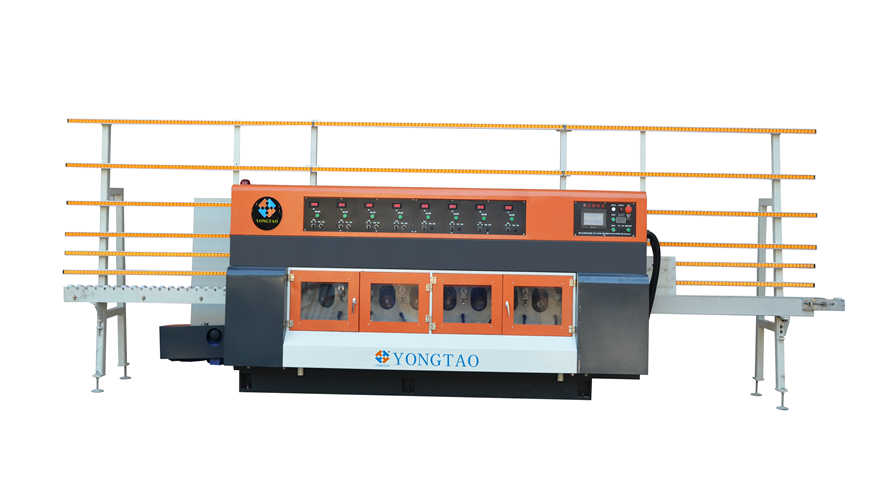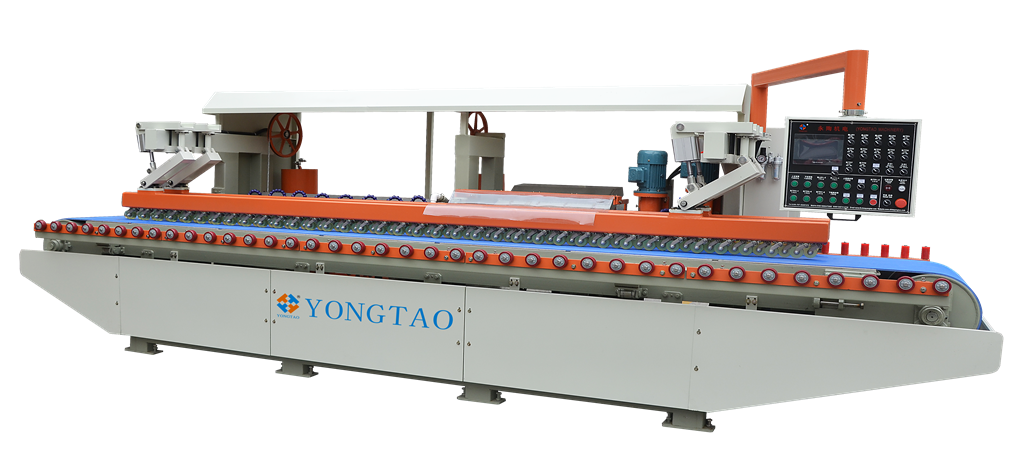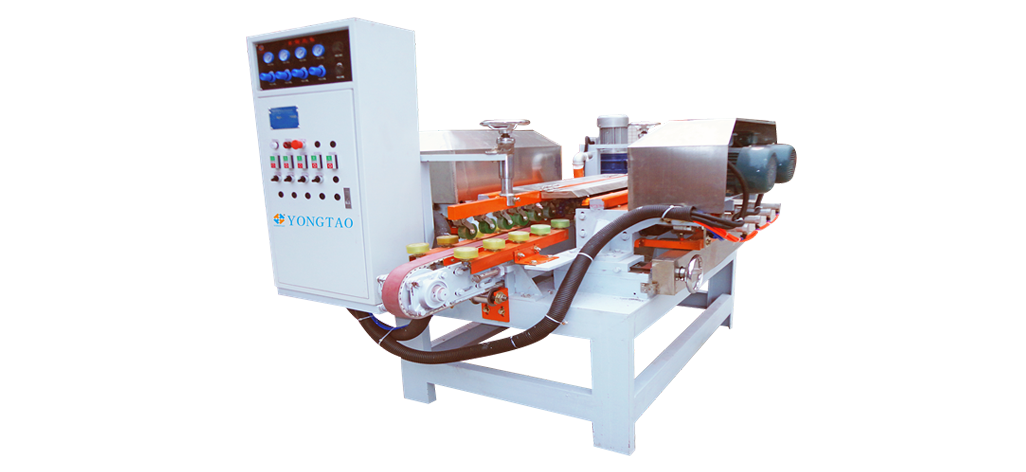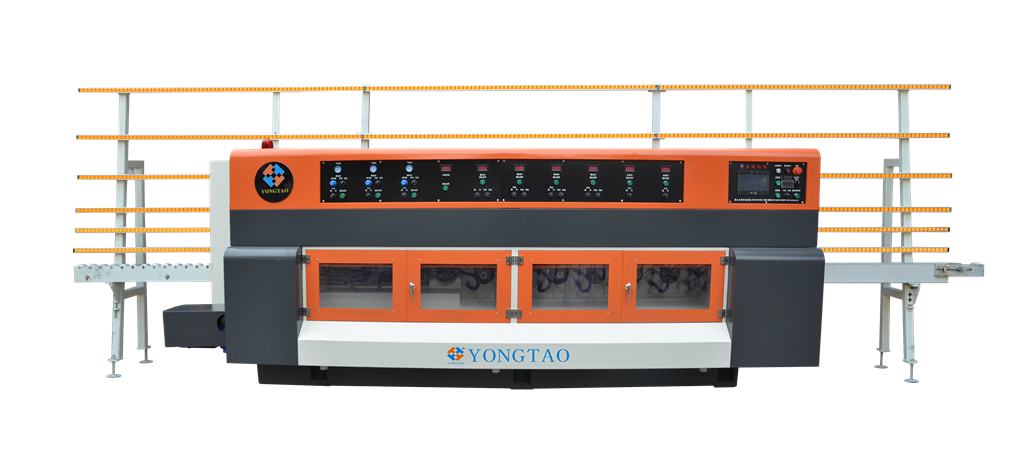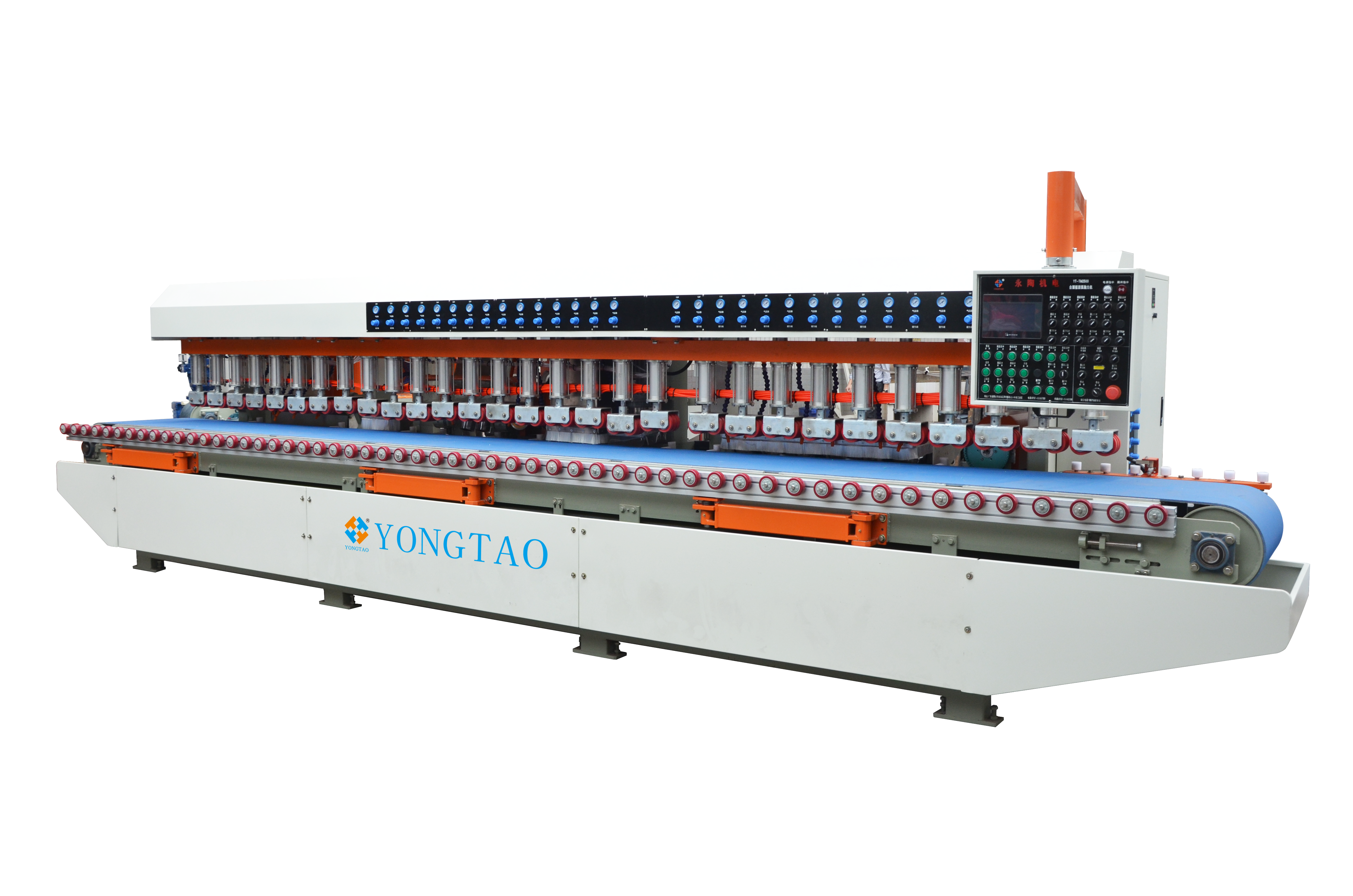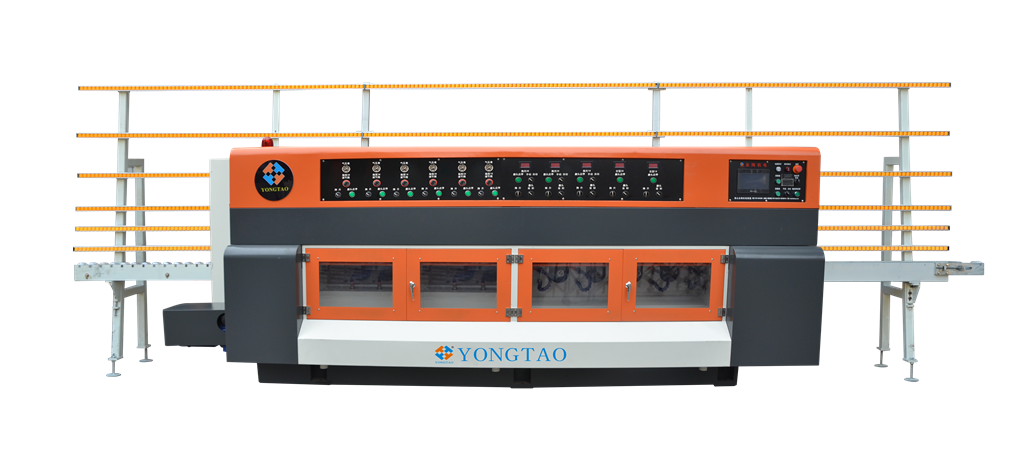
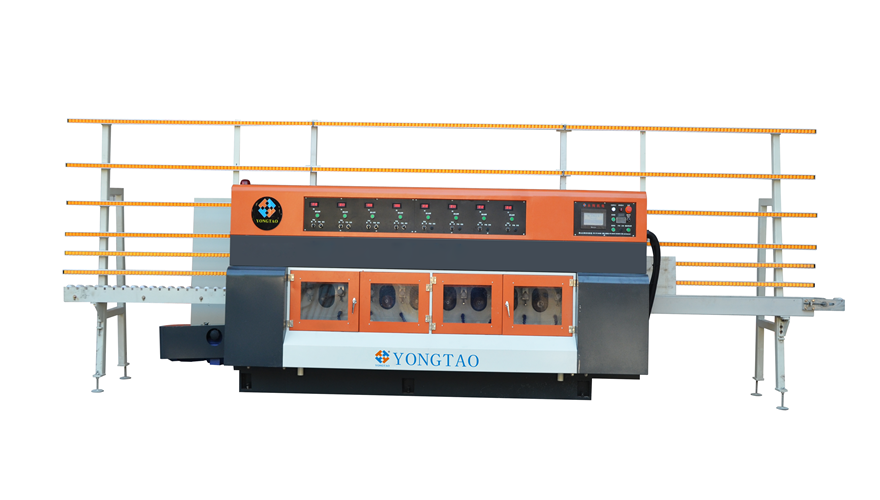
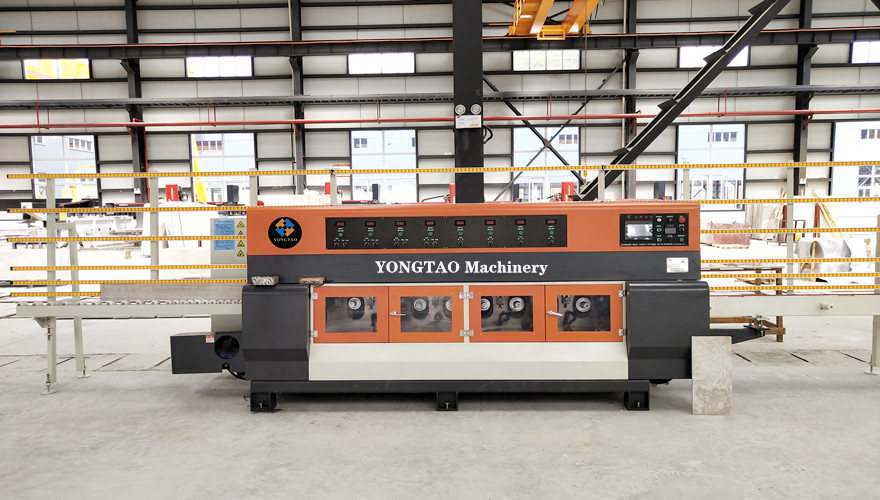
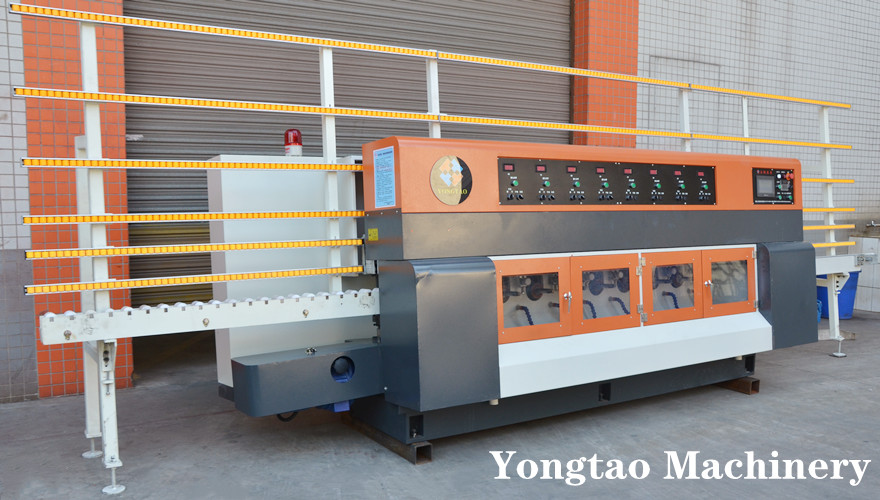
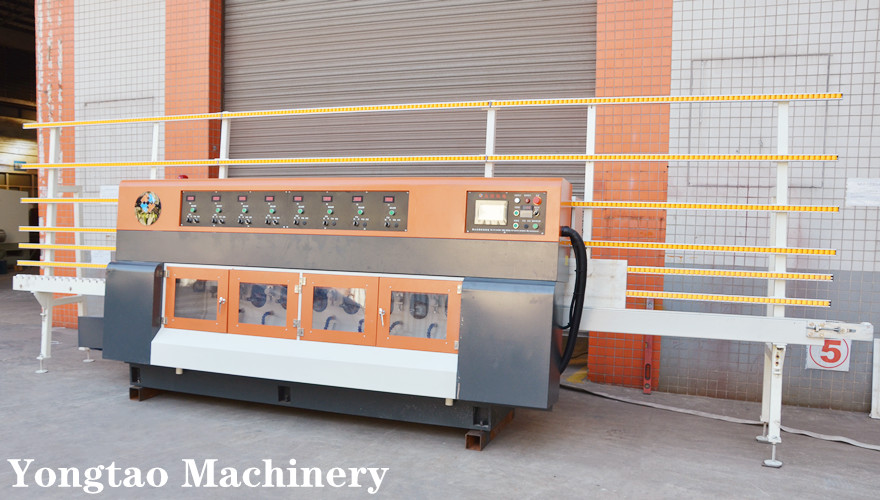
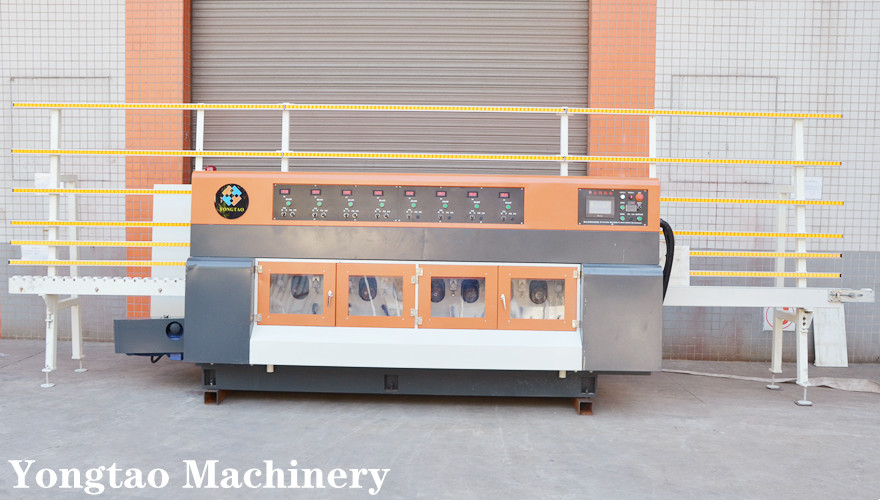
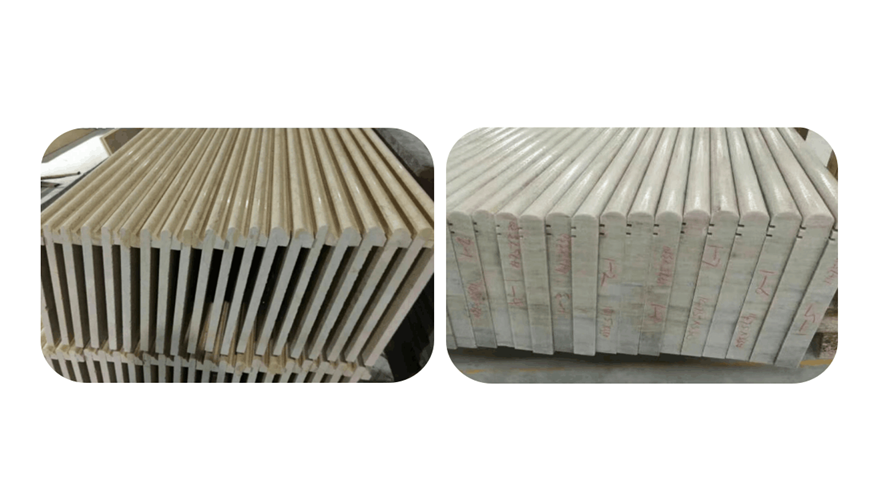
The YSM 8-head granite edge profiling and polishing machine combines three profiling heads and five polishing heads in one continuous production line. It is designed to form and finish bullnose, ogee, pencil, Dupont, cove and other decorative edges on granite, marble and quartz slabs.
Unlike a machine intended only for straight-edge finishing, the YSM uses dedicated diamond profiling wheels to create the required edge geometry before the five polishing heads refine the shaped surface. This multifunction granite edge polishing machine is suitable for stone factories producing countertops, window sills, stair components, decorative strips and single- or double-thickness stone products.
Working-head configuration: 3 profiling heads + 5 polishing heads
Processing materials: granite, marble and quartz stone
Processing width: 100–2800 mm
Maximum processing thickness: 60 mm
Processing speed: 0.5–1.5 m/min
Polishing control: automatic
The final configuration, wheel sequence and operating settings should be confirmed according to the material, slab thickness, selected edge profile and required surface finish.

The eight working heads are divided into two coordinated sections. The first three heads complete granite edge profiling and rough grinding, while the following five heads perform progressive polishing.
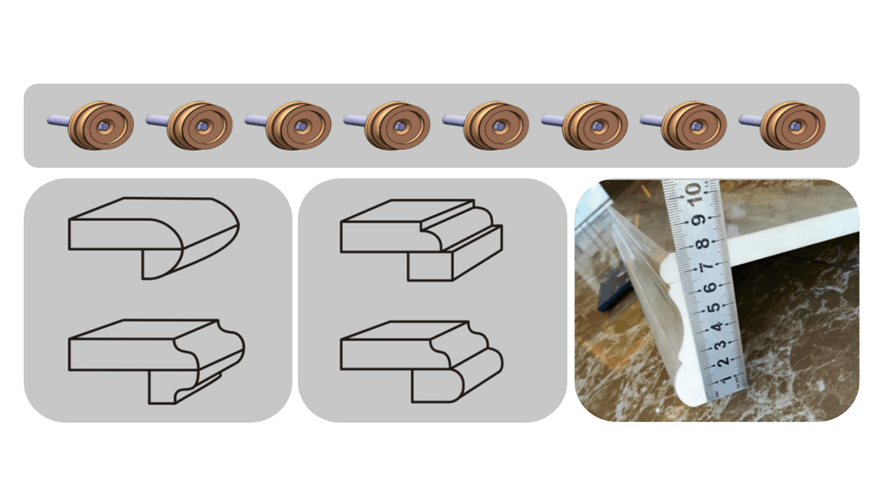
The three profiling heads use shaped diamond wheels to remove material gradually and establish the required edge geometry. Dividing granite edge grinding across several heads reduces the amount removed by a single wheel and supports a more controlled transition from the rough slab edge to the finished profile. This staged arrangement makes stone edge rough grinding more controlled before the workpiece enters the polishing section.
The profiling wheels must correspond to the selected design. Bullnose, ogee, pencil, Dupont and cove profiles require different wheel geometries. Wheel selection should therefore be confirmed from an edge drawing, template or finished sample before production begins.
After the profile has been formed, five polishing heads refine the shaped edge in sequence. The polishing section removes marks left by the profiling stage and gradually improves smoothness and gloss. For granite profile polishing, the wheel sequence should be selected according to the profile geometry, stone characteristics and required finish.
The PLC-controlled polishing arrangement supports repeatable head operation during continuous processing. Actual polishing results still depend on the material, abrasive sequence, wheel condition, contact pressure, cooling water and conveying speed.
This combined structure allows profiling and polishing to be completed in one production flow instead of moving the workpiece between separate machines.
Granite is the primary material for this model. Because granite is hard and may vary in grain structure, stable conveying, suitable diamond wheels and gradual material removal are important.
The machine can be configured as a granite bullnose polishing machine, granite ogee edge polishing machine or granite pencil edge polishing machine by installing the appropriate profiling and polishing wheels.
Before processing a new granite variety, test the selected wheel sequence on a representative sample. Check profile dimensions, surface gloss, grinding marks and consistency from the beginning to the end of the edge.
With tools and operating settings matched to the material, the YSM can also serve as a marble edge profiling machine. Marble may contain veins or areas with different hardness, so processing speed and wheel pressure must be adjusted carefully to reduce chipping and uneven polishing.
A sample test is recommended when processing fragile marble or a decorative profile with narrow transitions.
The machine can also be configured as a quartz edge profiling machine for suitable slab products. Stable workpiece support is important when processing long or double-thickness quartz components.
The wheel bond, polishing sequence, cooling water and conveying speed should be selected according to the actual quartz material and required finish. Results should be confirmed through trial processing before batch production.
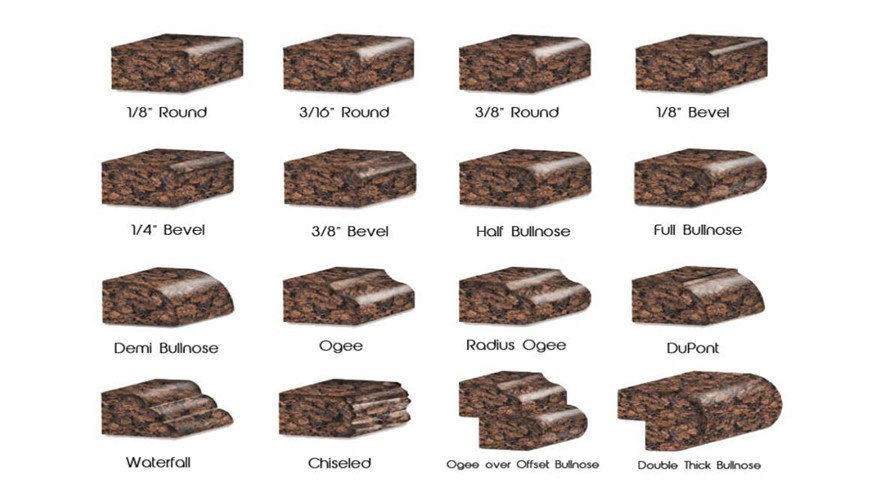
The YSM is designed as a granite decorative edge profiling machine. By changing the corresponding profiling and polishing wheels, it can process a wide range of exposed stone edges. This flexible wheel configuration supports decorative stone edge polishing for countertops, stair components, window sills and architectural stone products.
Available rounded profiles include:
Full Bullnose
Bullnose
Demi Bullnose
Double Bullnose
Dupont Bullnose
Offset Dupont Bullnose
Offset Ogee Bullnose
A granite bullnose polishing machine must form the radius accurately before polishing. The profiling-wheel shape must match the stone thickness and the required finished radius.
Available decorative profiles include:
Ogee
Ogee Edge
Deep Ogee
Cove Ogee
Dupont Ogee
Offset Ogee Bullnose
Waterfall
Ogee profiles contain curved transitions that must remain consistent along the full workpiece length. Tool geometry, workpiece positioning and conveying stability directly affect the finished shape.
Additional supported edge styles include:
Crescent Pencil
Dupont Edge
Dupont
Offset Dupont
Cove
The exact range that can be produced depends on the available wheel set, slab thickness and required profile dimensions. Buyers should provide an edge drawing or sample rather than relying only on the profile name, because the same name may describe different dimensions in different markets.
The YSM 8-head granite edge polisher is suitable for factories producing:
Granite and marble countertops
Window sill slabs
Stair treads and stair components
Decorative stone strips
Exposed countertop edges
Single-thickness slabs
Laminated or double-thickness edges
Architectural stone components
Custom bullnose and ogee products
The machine is most suitable when a factory repeatedly produces shaped edges and wants to combine rough profiling with automatic edge polishing in one line.
It is not intended to replace every type of edge-processing equipment. Products requiring only flat straight-edge polishing, upper and lower chamfering or other specialized operations may need a different machine configuration.
Provide the required edge profile, dimensions, slab thickness and material. A dimensioned drawing or physical sample is more reliable than an edge name alone.
Choose diamond profiling wheels that match the required geometry and material. Confirm the wheel diameter, profile shape and installation position.
Select polishing wheels suitable for granite, marble or quartz. The sequence should progress from initial mark removal to fine polishing.
Set the workpiece position, pressing arrangement, head position and conveying speed according to the slab dimensions and edge profile.
Run a representative sample before batch production. Inspect the entire edge rather than checking only one section.
Confirm:
Profile dimensions
Start-to-end consistency
Smooth profile transitions
Surface gloss
Remaining grinding marks
Edge chipping
Unpolished areas
Workpiece stability
Only begin continuous production after the sample satisfies the agreed requirements.
The finished geometry depends on the profiling-wheel shape. A wheel that does not match the drawing cannot produce the correct radius or decorative transition.
Granite, marble and quartz respond differently to grinding and polishing. Even two granite varieties may require different speeds or tools because their grain structure and hardness differ.
A speed that is too high may leave profiling or polishing marks. A speed that is unnecessarily low may reduce output and increase tool contact. The correct setting must balance finish quality, material response and production efficiency.
Worn, damaged or incorrectly arranged wheels can cause uneven geometry, visible lines or inconsistent gloss. Each wheel should complete its intended stage before the next head refines the edge.
Long, narrow or double-thickness components require stable support. Workpiece movement during granite edge grinding can change the profile and reduce polishing consistency.
Adequate water cools the tools and removes stone residue. Water flow and drainage should be checked before production, and blocked lines should be cleaned during routine maintenance.
The YSM is a practical choice when the following conditions apply:
Your main products require bullnose, ogee, pencil, Dupont or cove edges.
You process granite, marble or quartz slabs.
You need profiling and polishing in one continuous workflow.
Your maximum workpiece thickness does not exceed 60 mm.
Your required processing width is within 100–2800 mm.
Your expected processing speed is compatible with 0.5–1.5 m/min.
You can provide drawings or samples for wheel selection.
Your workshop can supply the required electricity, cooling water, compressed air and drainage.
A different configuration may be more suitable when production mainly involves flat edges, dedicated chamfering, double-sided processing or profiles outside the available wheel range.
To recommend the correct tooling and configuration, provide:
Material type: granite, marble or quartz.
Clear photos of the raw and finished workpieces.
Dimensioned drawings of every required edge profile.
Minimum and maximum workpiece dimensions.
Standard and maximum slab thickness.
Single- or double-thickness construction.
Required daily production output.
Target surface finish or gloss requirement.
Local voltage, frequency and phase.
Available water, drainage and compressed-air conditions.
Providing this information reduces configuration errors and makes sample testing more meaningful.
A machine specification explains capacity, but it does not by itself prove the finished result on every stone variety. Granite hardness, marble veins, quartz composition, profile depth and polishing requirements all affect processing.
Before confirming the machine, use representative material to produce the required edge. Evaluate the sample for geometry, dimensional consistency, smoothness, gloss, grinding marks and chipping. When possible, inspect several pieces rather than only one sample to assess repeatability.
For overseas projects, the agreed edge drawing, wheel configuration, sample result and main operating settings should be recorded before shipment.
Technical Specifications
| No. | Specification | Parameter |
|---|---|---|
| 1 | Machine model | YSM |
| 2 | Number of profiling heads | 3 |
| 3 | Number of polishing heads | 5 |
| 4 | Profiling wheel dimensions | Ø150–200 × 30 mm |
| 5 | Profiling-head motor power | 5.5 kW |
| 6 | Polishing-head motor power | 3 kW |
| 7 | Polishing method | Automatic |
| 8 | Processing width | 100–2800 mm |
| 9 | Processing speed | 0.5–1.5 m/min |
| 10 | Maximum processing thickness | 60 mm |
| 11 | Total installed power | 40.32 kW |
| 12 | Air consumption | 30 L/min |
| 13 | Water consumption | 400 L/min |
| 14 | Machine dimensions (L × W × H) | 3.48 × 1.24 × 1.85 m |
| 15 | Approximate machine weight | 2800 kg |
The specifications listed above are based on the standard YSM machine configuration. Profiling-wheel geometry, polishing sequence and operating settings should be confirmed using the customer’s material, slab thickness and required edge drawing. Where practical, representative samples should be processed and inspected before the final configuration is approved.
The YSM has three profiling heads and five polishing heads. The first section forms and rough-grinds the required edge, while the second section progressively polishes the shaped surface.
Yes. It can process suitable single- and double-thickness products within its supported dimensions. The wheel geometry, workpiece support and operating settings must match the actual thickness and edge construction.
Supported shapes include Full Bullnose, Bullnose, Demi Bullnose, Double Bullnose, Ogee, Deep Ogee, Crescent Pencil, Dupont, Cove, Waterfall and combined decorative profiles. The corresponding wheel set is required for each design.
No. Different edge geometries require different profiling and polishing wheels. Submit drawings or samples of the required edges so the correct wheel sets can be selected.
Yes, when fitted with suitable tools and adjusted for the material. Wheel selection, conveying speed, polishing sequence and operating pressure may differ between granite, marble and quartz.
The stated processing width is 100–2800 mm, the maximum processing thickness is 60 mm, and the processing speed is 0.5–1.5 m/min. Final suitability must be confirmed using the actual workpiece dimensions and profile.
Check profile dimensions, surface gloss, visible grinding lines, chipping, smooth transitions and consistency across the full workpiece. The beginning, middle and end of the processed edge should all be inspected.
Inspect the profiling and polishing wheels, water lines, belts, pressing components, working heads and electrical controls regularly. Remove stone residue after production and replace worn wheels before they affect profile accuracy or surface finish.
Send Yongtao your stone material, slab dimensions, edge drawings, production requirements and local electrical standard. We can review whether the YSM 8-head granite edge profiling and polishing machine matches your required products and prepare a suitable tooling and machine configuration.
Where practical, provide representative granite, marble or quartz samples for test processing. The finished sample offers more reliable evidence than selecting a machine only by the number of working heads.
0086-18665475362
[email protected]
Road 3, Wuzhuang Xiaofengtian Ind. Zone, Luocun Town, Nanhai Dist., Foshan, Guangdong, China