

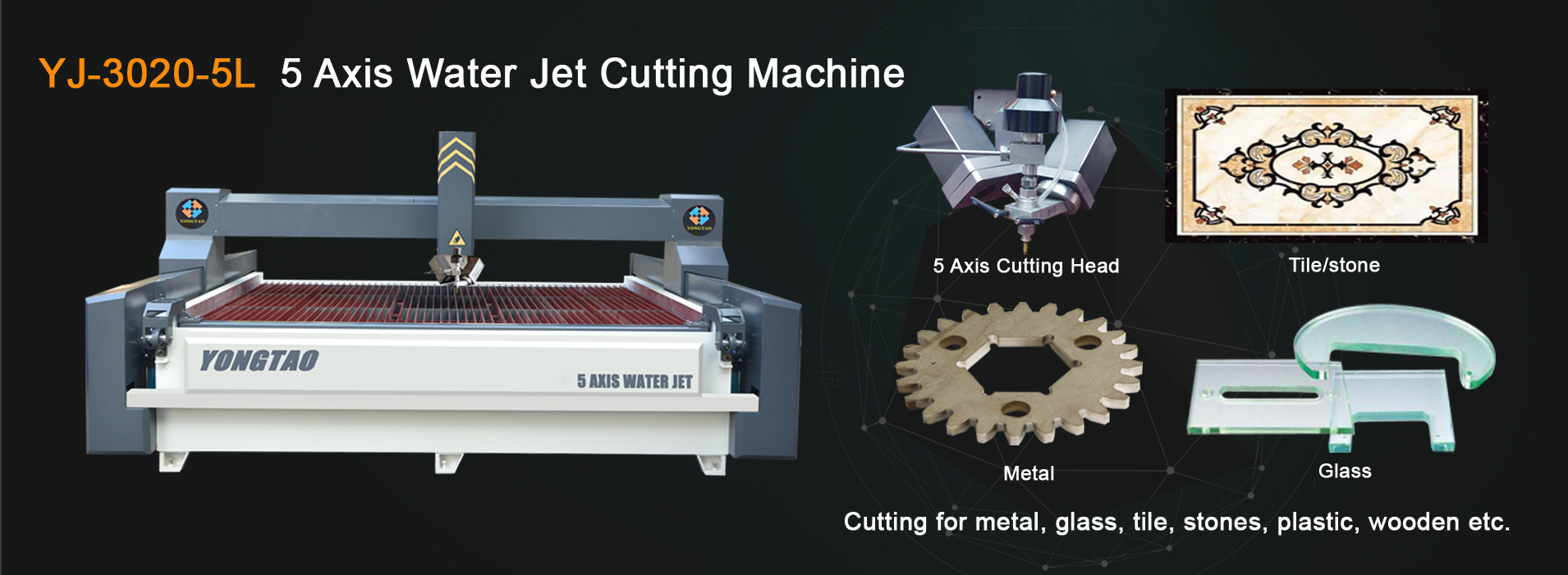
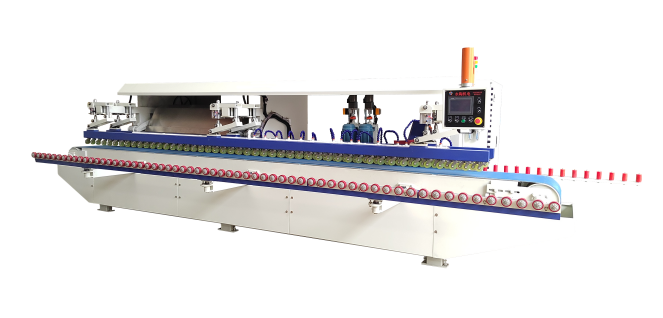
Stone edge profile machines are essential for stone processing, providing the perfect finish for various materials such as quartz stone, marble, and granite. Whether you are working with quartz kitchen countertops or marble bathroom vanities, a reliable edge polishing machine ensures that the stone surfaces are polished to perfection, enhancing their overall aesthetics. These machines are particularly favored for their ability to handle different types of edges, such as straight, beveled, and rounded edges, offering a customized look to stone countertops.
Yongtao Machinery is an industry leader in manufacturing stone edge polishers. With 14 years of expertise, Yongtao has developed a reputation for producing machines that deliver high-quality results for polishing granite countertops, marble countertops, and even quartz countertops. Their stone edge polishers are designed with cutting-edge technology to meet the needs of large, medium, and small-sized stone processing factories.
The marble edge polishing machine by Yongtao stands out for its use of pneumatic brick pressing structures, ensuring that the stone remains stable during the processing phase. Each polishing head swings up and down, allowing for efficient and uniform polishing of various edges. Whether you're working on a granite edge profile or polishing marble countertops, this machine guarantees a smooth, professional finish.
In addition to marble, Yongtao also manufactures granite edge moulding machines. These machines are equipped with advanced water grinding discs, which efficiently polish the upper and lower edges of granite countertops, making them look flawless and pristine. For granite edge profile machines, the precision and durability of the polishing process ensure that all edge types, such as bullnose, beveled, or rounded, are finished to perfection.
Yongtao’s stone bullnose machine is another example of their innovative edge-polishing technology. This machine can effortlessly handle a wide variety of stones, providing custom edge polishing solutions for all types of countertops. Whether you're looking to polish quartz countertops or other materials, this machine ensures that the stone's beauty and structural integrity are preserved.
The company's edge polisher for granite is highly efficient and built for performance. It allows manufacturers to create customized stone designs with high precision, whether for granite kitchen countertops or marble bathroom countertops. This edge polisher is known for its stability and ease of operation, making it a popular choice for both large-scale factories and individual stone processing businesses.
Yongtao’s granite edge profile machine is particularly versatile. It can process multiple edge types, including thickened edges, straight edges, and round edges, providing flexibility for various design requirements. The intelligent control system integrated into the machine allows for automatic adjustments, further enhancing its efficiency and productivity.
Marble edge profile machines developed by Yongtao are perfect for high-end residential and commercial projects. These machines offer consistent, high-quality results for a wide range of stone surfaces, from marble to quartz. Additionally, they simplify the operation process with their user-friendly design, allowing for smooth and straightforward operation even by novice operators.
For those in need of precision, Yongtao’s granite edge moulding machines are a top choice. These machines can mould various edge types on granite and other stones with impressive accuracy. With the added benefit of automatic processing, they significantly reduce manual labor while improving output.
Stone edge polishers from Yongtao are suitable for a wide range of applications, including the customization of quartz and marble countertops. The machines are equipped to polish multiple edge shapes, ensuring a smooth and glossy finish on all types of stone. Whether you're looking to polish quartz countertops or polish granite countertops, Yongtao machines deliver the highest level of precision and efficiency.
Finally, the stone edge polishing machine by Yongtao offers strong stability during operation, ensuring that every stone surface is polished accurately and without deviation. This strong stability, combined with its versatile applications in edge polishing, makes the machine an indispensable tool in the stone processing industry.
In conclusion, Yongtao's edge polisher series, including machines for granite and marble countertops, are the ultimate solution for achieving high-quality, efficient, and stable edge polishing. Whether you're an enterprise or an individual engaged in stone processing, Yongtao Machinery can provide you with the best products and services.
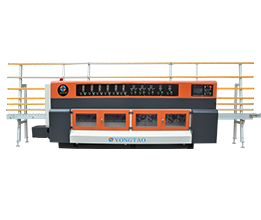 YSMD 5+3+3 Multifunction Marble Edge Profile Chamfer Polishing Machine
,This machine is the new generation product of YONGTAO Machinery. It can process single thick slab and double thick slab for all kinds of edge shapes, such as 180 degree round edge, flat edge, chamfer etc. This machine have 2 heads to profile, and 3 heads to polish. The polishing wheel adopts automatic control system. It great s...
YSMD 5+3+3 Multifunction Marble Edge Profile Chamfer Polishing Machine
YSMD 5+3+3 Multifunction Marble Edge Profile Chamfer Polishing Machine,This machine is the new generation product of YONGTAO Machinery. It can process single thick slab and double thick slab for all kinds of edge shapes, such as 180 degree round edge, flat edge, chamfer etc. This machine have 2 heads to profile, and 3 heads to polish. The polishing wheel adopts automatic control system. It great s...
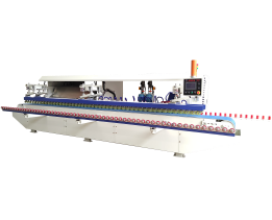 YCMDYP-2500 Quartz Stone Countertop Double Round Edge Polisher
The Quartz Stone Countertop Double Round Edge Polisher is a customized machine for quartz countertop processing, it is the latest upgrade countertop edge polish machine. Only one machine can finish straight edge polish, top and bottom round edge polish for quartz countertop. The front of machine have squaring head, top and bottom chamfer head, and R round profile wheels. It through change the R ro...
YCMDYP-2500 Quartz Stone Countertop Double Round Edge Polisher
The Quartz Stone Countertop Double Round Edge Polisher is a customized machine for quartz countertop processing, it is the latest upgrade countertop edge polish machine. Only one machine can finish straight edge polish, top and bottom round edge polish for quartz countertop. The front of machine have squaring head, top and bottom chamfer head, and R round profile wheels. It through change the R ro...
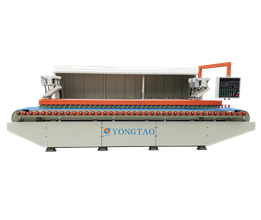 YCMP-2800 4+14 Quartz Countertop Flat Edge Polisher
YCMP-2800 4+14 is an advanced polisher for quartz and marble countertop flat edges from Yongtao. Structurally, this machine is paired with an R3 round edge polisher to meet the demand of customers who need combined techniques to process quartz or marble surfaces. Its unique performance lies in polishing flat edges and R3 round ones simultaneously. What’s more, YCMP-2800 4+14 can effectively grind...
YCMP-2800 4+14 Quartz Countertop Flat Edge Polisher
YCMP-2800 4+14 is an advanced polisher for quartz and marble countertop flat edges from Yongtao. Structurally, this machine is paired with an R3 round edge polisher to meet the demand of customers who need combined techniques to process quartz or marble surfaces. Its unique performance lies in polishing flat edges and R3 round ones simultaneously. What’s more, YCMP-2800 4+14 can effectively grind...
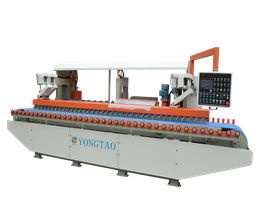 YCMYP-2800 2+4+8 Quartz Countertop Round Edge Polisher
YCMYP-2800 is a next-level quartz countertop round edge polisher designed by Yongtao. Unlike its counterparts, YCMYP-2800 is intended to be mainly used for polishing and R3 edge rounding on top & bottom surfaces. It blends professional processing, fast speed, and high precision. The machine has two round edge profile wheels in front, four R3 polishing heads at its top, and eight R3 polishing h...
YCMYP-2800 2+4+8 Quartz Countertop Round Edge Polisher
YCMYP-2800 is a next-level quartz countertop round edge polisher designed by Yongtao. Unlike its counterparts, YCMYP-2800 is intended to be mainly used for polishing and R3 edge rounding on top & bottom surfaces. It blends professional processing, fast speed, and high precision. The machine has two round edge profile wheels in front, four R3 polishing heads at its top, and eight R3 polishing h...
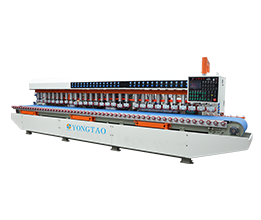 YCYP-2500 Quartz Countertop Edge Polishing Machine
,The machine is mainly used to process the quartz countertop edges. It can do R3 round edge, calibrating, grooving, flat polishing. The machine have special pressure structure, each press roller drive bu independent cylinder. The structure can provide enough pressure when process different width slab at same time, to make sure whole processing is s...
YCYP-2500 Quartz Countertop Edge Polishing Machine
YCYP-2500 Quartz Countertop Edge Polishing Machine,The machine is mainly used to process the quartz countertop edges. It can do R3 round edge, calibrating, grooving, flat polishing. The machine have special pressure structure, each press roller drive bu independent cylinder. The structure can provide enough pressure when process different width slab at same time, to make sure whole processing is s...
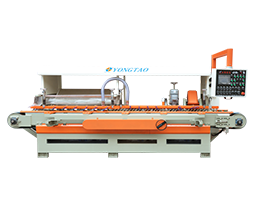 YCYP-200 Quartz Countertop Backsplash Bullnose Bevel Edge Polishing Machine
,This machine is mainly used for processing the edge of the back splash of quartz kitchen tops, such as small round and side edge polishing. It can make R3 round edge, bevel edge, as well as front strips arc and 23 degrees bevel edges. high smoothness, high processing efficiency, conveyor belt transmission, large output, sa...
YCYP-200 Quartz Countertop Backsplash Bullnose Bevel Edge Polishing Machine
YCYP-200 Quartz Countertop Backsplash Bullnose Bevel Edge Polishing Machine,This machine is mainly used for processing the edge of the back splash of quartz kitchen tops, such as small round and side edge polishing. It can make R3 round edge, bevel edge, as well as front strips arc and 23 degrees bevel edges. high smoothness, high processing efficiency, conveyor belt transmission, large output, sa...
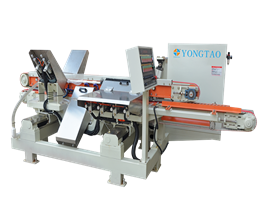 YSMDP-250 4+2+2 Quartz Double Flat Bevel Edge Polishing Machine
,put the material on the conveyor belt, the bottom belt will transport the material into the working area, and the top belt will press the material. At the front of machine, there are 4 straight edge polish heads on each side. They can polish both sides at the same time. At the middle of machine, there are 2 bottom chamfer heads on eac...
YSMDP-250 4+2+2 Quartz Double Flat Bevel Edge Polishing Machine
YSMDP-250 4+2+2 Quartz Double Flat Bevel Edge Polishing Machine,put the material on the conveyor belt, the bottom belt will transport the material into the working area, and the top belt will press the material. At the front of machine, there are 4 straight edge polish heads on each side. They can polish both sides at the same time. At the middle of machine, there are 2 bottom chamfer heads on eac...
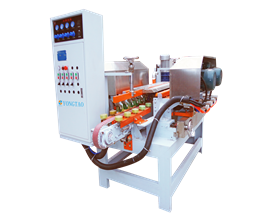 YSR-2 4+4 Stone Double Flat Edge Polishing Machine
YSR-2 4+4 stone Double Flat edge polishing machine is a small stone edge polishing machine which made by YONGTAO machinery. It is mainly use for small size material both sides edge polishing. The polishing head push by pneumatic, which can accuracy polish via air pressure controlling. In this way, the edge effect is perfect, good brightness. During processing, the stainless steel cover protect the...
YSR-2 4+4 Stone Double Flat Edge Polishing Machine
YSR-2 4+4 stone Double Flat edge polishing machine is a small stone edge polishing machine which made by YONGTAO machinery. It is mainly use for small size material both sides edge polishing. The polishing head push by pneumatic, which can accuracy polish via air pressure controlling. In this way, the edge effect is perfect, good brightness. During processing, the stainless steel cover protect the...
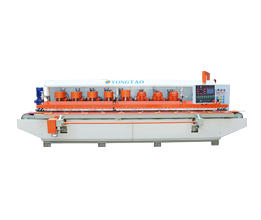 YSMP-1200 8 Head Stone Edge Profiling Polishing Machine
YSMP-1200 8 head stone edge profiling polishing machine is one of the stone edge polishing machine of Yongtao machinery. This machine adopt horizontal type to process the stone slab.It can process marble, artificial stone, granite etc. The machine is consists of two parts, profiling part and polishing part, which have the reasonal structure, stable operation. The profiling part use three plating w...
YSMP-1200 8 Head Stone Edge Profiling Polishing Machine
YSMP-1200 8 head stone edge profiling polishing machine is one of the stone edge polishing machine of Yongtao machinery. This machine adopt horizontal type to process the stone slab.It can process marble, artificial stone, granite etc. The machine is consists of two parts, profiling part and polishing part, which have the reasonal structure, stable operation. The profiling part use three plating w...
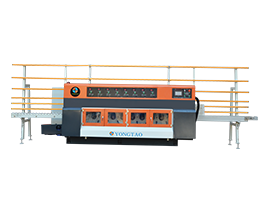 YSM 8 Head Multifunction Granite Edge Profile Polishing Machine
, this machine is one of the latest models of Yongtao Machinery. The machine is mainly used to process all kinds of single or double thick slab, such as window slab. It can make round edge, ogee edge, pencil edge etc. The machine have rough grind(profile) and polish two parts, reasonable structure, running stable. The rough grind part ...
YSM 8 Head Multifunction Granite Edge Profile Polishing Machine
YSM 8 Head Multifunction Granite Edge Profile Polishing Machine, this machine is one of the latest models of Yongtao Machinery. The machine is mainly used to process all kinds of single or double thick slab, such as window slab. It can make round edge, ogee edge, pencil edge etc. The machine have rough grind(profile) and polish two parts, reasonable structure, running stable. The rough grind part ...
 0086 18665475362
[email protected]
Road 3, Wuzhuang Xiaofengtian Ind. Zone, Luocun Town, Nanhai Dist., Foshan, Guangdong, China
0086 18665475362
[email protected]
Road 3, Wuzhuang Xiaofengtian Ind. Zone, Luocun Town, Nanhai Dist., Foshan, Guangdong, China
 0086 18665475362
  [email protected]
 Road 3, Wuzhuang Xiaofengtian Ind. Zone, Luocun Town, Nanhai Dist., Foshan, Guangdong, China
  English