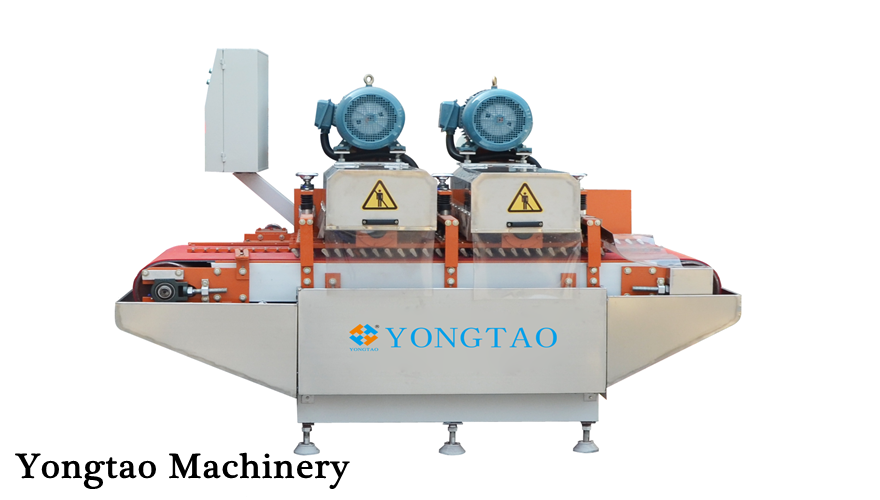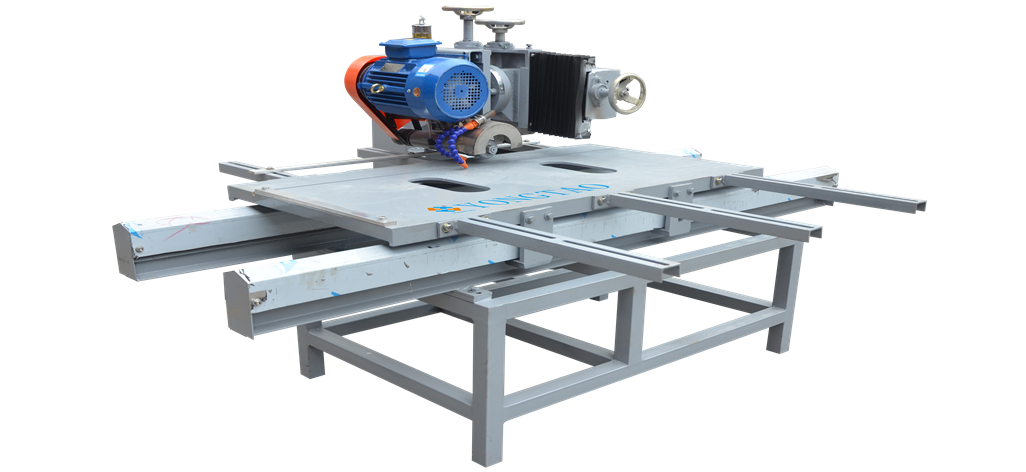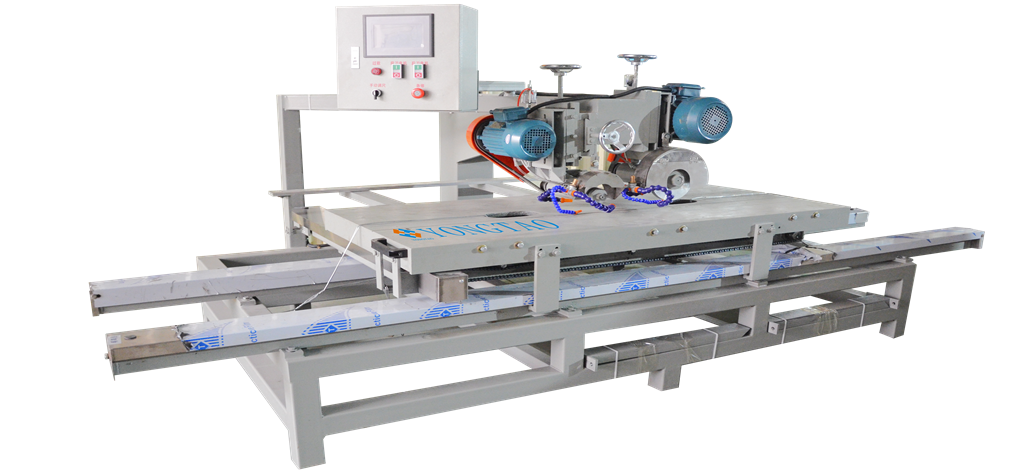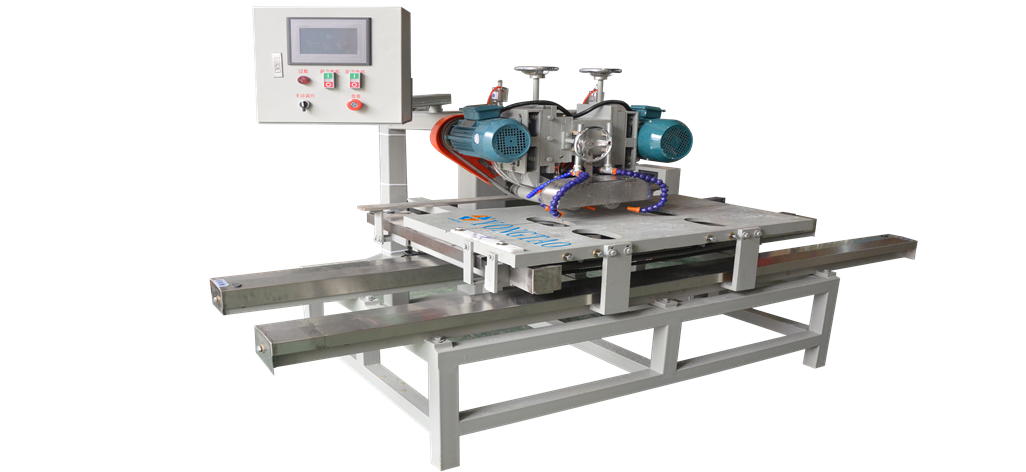
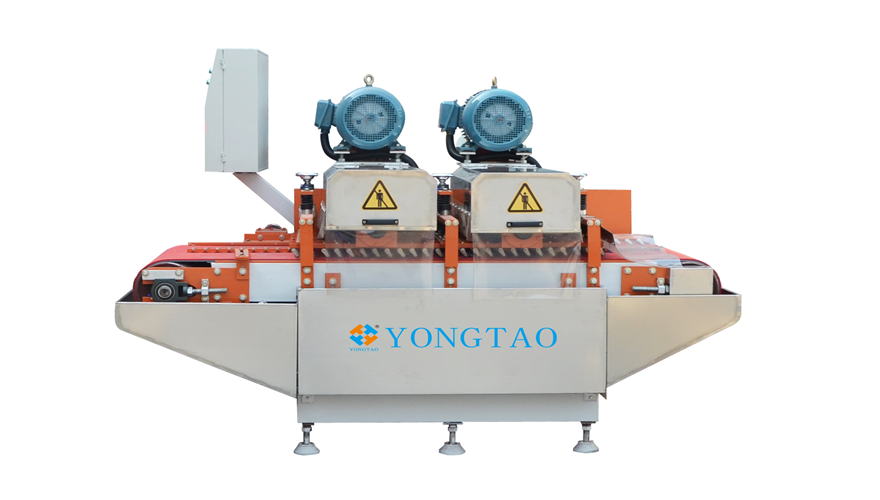
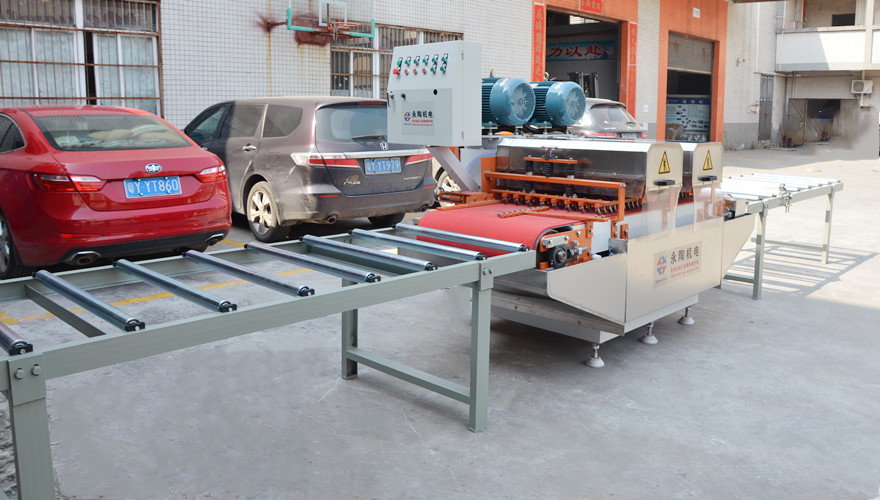
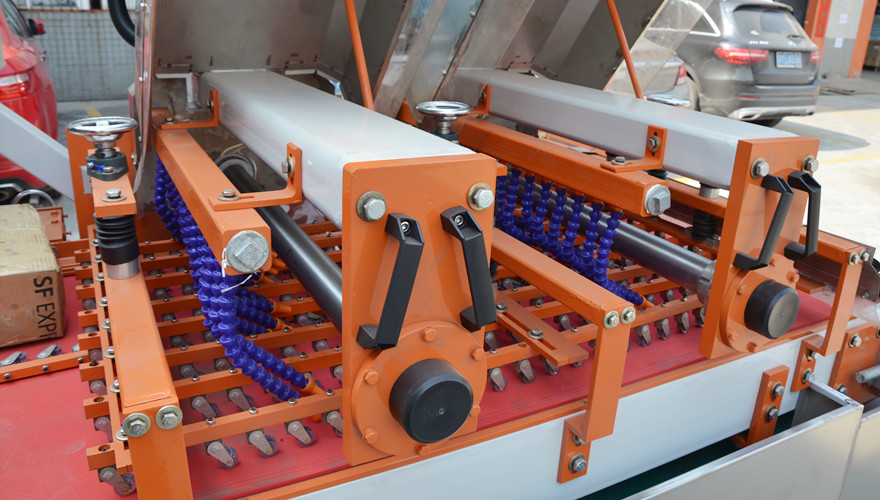
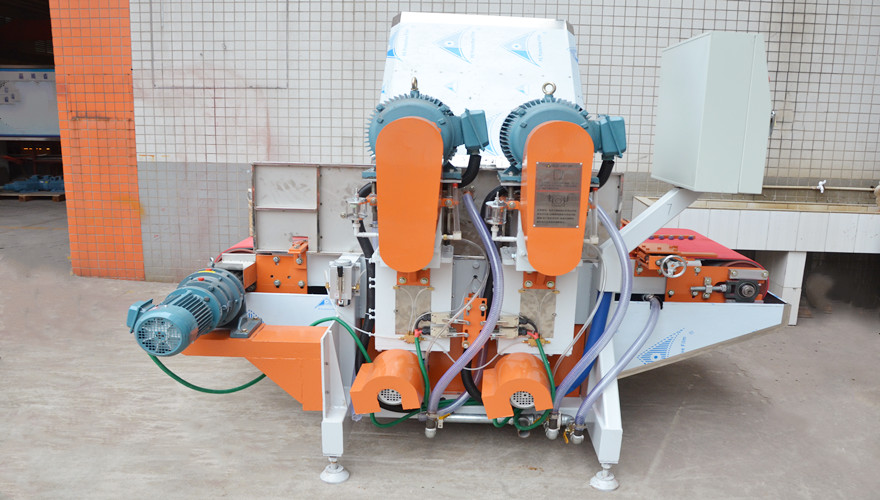
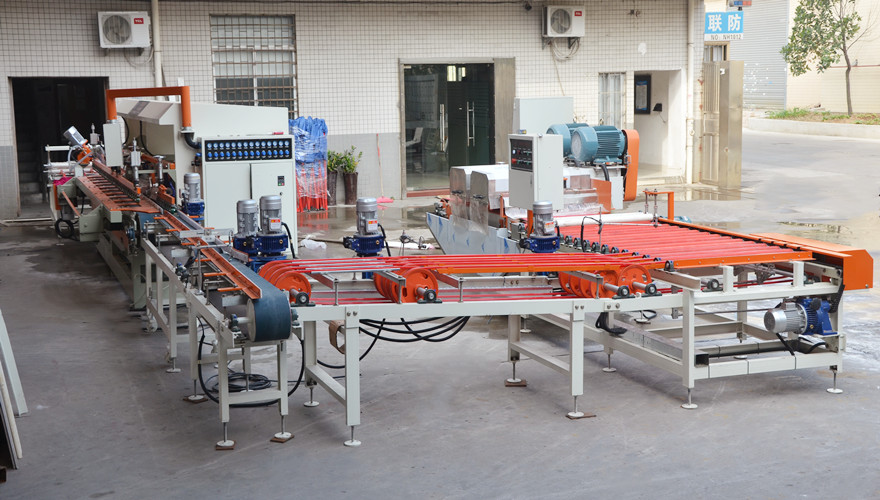
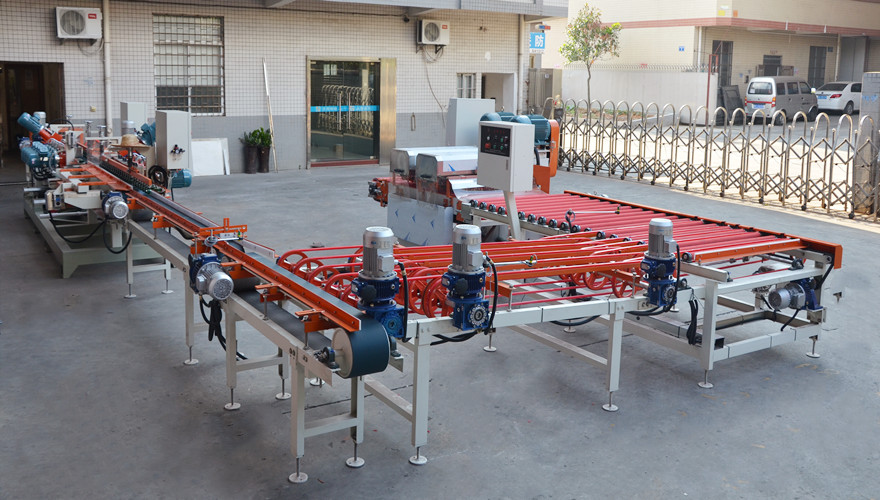
The YTQZ-B/2-800 is an 800mm double-spindle multi-blade tile strip cutting machine designed for continuous batch cutting of ceramic tile, sintered stone, paving stone and quartz. It uses two cutting spindles, with multiple diamond blades arranged according to the required finished width.
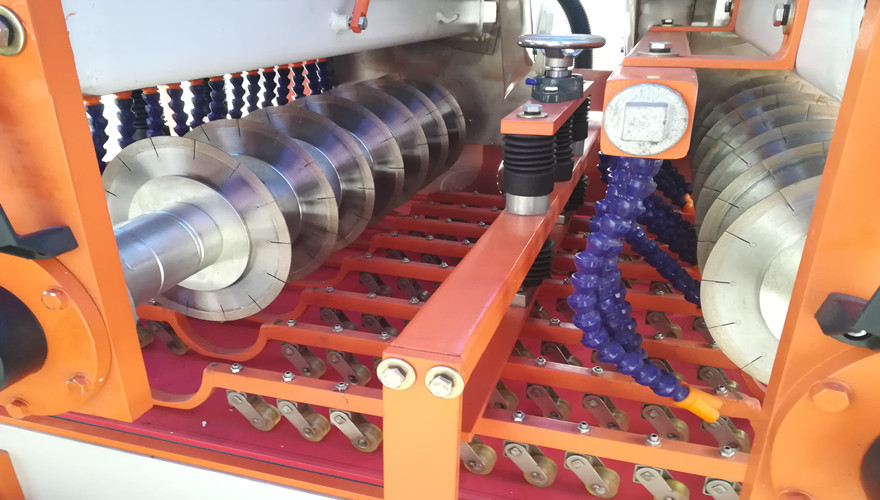
Each spindle can be configured with approximately 7–8 blades depending on the cutting layout and material conditions. The double-spindle structure allows cutting to be divided between two cutting stages, helping control cutting load and edge chipping while producing multiple parallel strips during continuous conveyor feeding.
The machine has an 820mm conveyor belt, a 20–800mm cutting width, a maximum cutting thickness of 20mm and an adjustable conveyor speed of 0.8–4.0m/min. It is particularly suitable for repeated tile strip cutting, ceramic skirting preparation and batch processing where consistent finished widths are required.
The YTQZ-B/2-800 tile strip cutting machine is developed for factories that need to divide larger tiles or building-material slabs into multiple narrower pieces efficiently.
Unlike single-blade cutting, where each cutting position is processed separately, the multi-blade configuration places several diamond blades across the spindle. Multiple parallel cutting positions can therefore work as the material passes through the machine.
Typical applications include:
• Cutting ceramic tiles into multiple parallel strips
• Preparing ceramic strips for skirting boards
• Cutting sintered stone into specified strip widths
• Cutting quartz materials into repeated strip sizes
• Processing paving materials into narrower pieces
• Batch cutting repeated dimensions from 800mm-wide materials
• Preparing small pieces according to specified production dimensions
• Continuous processing where stable strip width and repeatability are required
The machine is intended primarily for repeated multi-strip processing rather than flexible one-off shape cutting.

The main difference between the YTQZ-B/2-800 and a single-spindle multi-blade cutter is its double-spindle cutting structure.
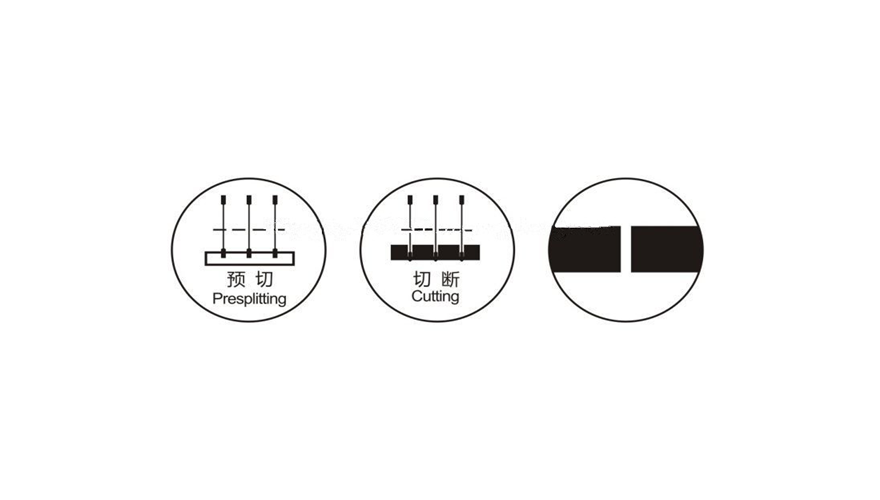
Both cutting positions work along the same conveyor-fed production path. When configured for staged cutting, the first spindle performs the initial cutting stage and the second spindle completes the required cut.
Dividing the cutting operation between two stages can reduce the cutting load placed on the material during a single cutting action. This is especially useful when processing brittle ceramic surfaces or other materials where edge condition is important.
The double spindle ceramic tile strip cutter is therefore suitable for users who require continuous multi-blade production while placing greater emphasis on stable cutting conditions and finished-edge control.
Actual cutting depth, blade arrangement and conveyor speed should always be selected according to the material, thickness, blade specification and required finished quality.
Before installing the blades, confirm the original material dimensions, thickness, required strip width and number of finished pieces.
Blade thickness and cutting kerf must be included when calculating the final layout. The nominal distance between two blades should not automatically be treated as the exact finished strip width.
Each spindle can be equipped with multiple cutting blades according to the required configuration.
Spacers are installed between adjacent blades to establish the cutting positions. Changing the spacer arrangement allows different finished widths to be prepared without limiting the machine to one fixed strip specification.
The complete arrangement should be secured and checked before production begins.
The standard conveyor speed is adjustable from 0.8 to 4.0m/min.
The correct operating speed depends on material hardness, thickness, blade quantity, cutting depth and required edge quality. A higher conveyor speed should not be selected only to increase theoretical output if the finished cutting result becomes unstable.
The material travels continuously through the two cutting positions.
For staged processing, the first spindle begins the cut and the second spindle completes it. This double-stage cutting configuration is designed to provide a more controlled cutting process than forcing the full cutting load into a single stage.
Before continuous batch production, inspect and measure the first processed strips.
Check finished width, edge condition, blade marks and dimensional consistency. If necessary, adjust the spacer arrangement, blade condition or conveyor speed before continuing production.
The YTQZ-B/2-800 uses multiple diamond blades to process several parallel cutting positions during continuous feeding.
Each spindle can support approximately 7–8 blades when the required cutting configuration permits. The actual quantity should be determined from the original material size, finished strip width, blade thickness, cutting kerf and operating conditions.
This arrangement allows the machine to work as a multi-blade ceramic tile strip cutter for repeated batch cutting.
The adjustable blade spacing system is especially useful when a factory processes several strip specifications. Instead of relying on one fixed cutting width, operators can select suitable spacers and rearrange the blades for the next production requirement.
Correct blade installation is important for dimensional consistency. Blade condition, spindle stability, spacer accuracy and material feeding all affect the final cutting result.
Ceramic skirting preparation is one of the main applications of the YTQZ-B/2-800.
Larger ceramic tiles can be divided into multiple narrow strips according to the required skirting dimensions. The multi-blade system allows several cutting positions to work during the same conveyor-fed process, making the machine suitable for repeated skirting-strip orders.
As a ceramic tile skirting cutting machine, the B/2-800 performs the strip-cutting stage. If the finished skirting product requires edge polishing, chamfering, profiling or other finishing, those operations are completed by the appropriate downstream equipment.
For batch production, the required finished width should be confirmed before blade installation, and the first finished pieces should be measured before continuous processing.
The machine is designed for materials with a cutting width of up to 800mm and uses an 820mm conveyor belt.
For 800×800mm ceramic tile processing, multiple blades can be arranged according to the required finished dimensions. Rather than making each parallel cut separately, the material passes through the configured blade groups to produce multiple strips during the cutting process.
The exact number and width of finished pieces depend on blade positions, blade thickness, kerf allowance and the required cutting layout.
For this reason, a production drawing or finished-size requirement should be confirmed before the final blade and spacer configuration is selected.
The machine is suitable for repeated strip cutting of ceramic tiles, including preparation of strips for skirting applications.
A suitable diamond blade, stable feeding speed and sufficient cooling water should be selected according to the ceramic body and surface condition.
The YTQZ-B/2-800 can also be configured for sintered stone strip cutting.
Because sintered stone characteristics vary by product, blade selection, material thickness, feeding speed and required edge quality should be confirmed before continuous production. Trial cutting with the customer's actual material is recommended when finished-edge requirements are important.
Quartz materials can be processed into repeated strip dimensions using a suitable blade configuration.
For multi-blade quartz cutting, spindle load, blade condition, cooling and conveyor speed should be matched to the material characteristics and cutting thickness.
The machine can process suitable paving materials into narrower strips or specified-size pieces when the material dimensions and thickness fall within the machine's processing range.
Because paving materials vary considerably in density and composition, the required cutting configuration should be confirmed through material information or trial cutting before production.
In addition to long strips, the machine can be used as part of a process for preparing smaller pieces from ceramic, sintered stone, quartz or paving materials.
This application is useful when factories require repeated small pieces for material display, product samples or subsequent processing.
The finished size should be defined through the actual cutting layout rather than treating the machine as a dedicated laboratory sample cutter.
Model: YTQZ-B/2-800
Number of cutting heads: 2 pcs
Conveyor belt width: 820mm
Blade specification: Φ150–300mm × 60mm
Main motor power: 15kW
Conveyor motor: 1.5kW
Conveyor speed: 0.8–4.0m/min, adjustable
Lifter motor: 0.75kW
Cutting width: 20–800mm
Maximum cutting thickness: 20mm
Total power: 33kW
Machine dimensions: 2.5 × 1.78 × 1.63m
Machine weight: Approximately 1,800kg
Water consumption: Approximately 400L/min
Final machine configuration should be confirmed according to the ordered specification, material, blade arrangement and production requirements.
The double-spindle structure divides the cutting operation between two cutting positions and supports staged processing for better control of demanding materials.
Multiple diamond blades allow several parallel cutting positions to operate during continuous feeding. The blade quantity and arrangement are selected according to the required finished dimensions.
Spacers between blades determine the cutting layout. Different spacer combinations allow the machine to process different strip widths according to production requirements.
The 820mm conveyor belt supports a cutting width range of 20–800mm, making the machine suitable for common 800mm tile and building-material processing applications.
The conveyor operates at 0.8–4.0m/min. Speed can be adjusted according to the material, thickness, blade configuration and required cutting quality.
Water is supplied during cutting to cool the cutting area and remove cutting debris. The spindle bearing block also uses water cooling to support continuous operation and control operating temperature.
Stable cutting depends on the complete machine setup rather than one parameter alone.
Before production:
• Confirm the material dimensions and thickness.
• Calculate the finished cutting layout.
• Include blade kerf when determining spacer dimensions.
• Check that all blades and spacers are correctly secured.
• Confirm that the conveyor is tracking correctly.
• Supply sufficient cooling water to the cutting area.
• Select an initial conveyor speed suitable for the material.
• Inspect and measure the first finished pieces.
• Adjust the setup before starting continuous batch production if required.
When the material specification changes, the previous cutting settings should not automatically be assumed to be suitable for the new material.
The YTQZ-B/2-800 is particularly suitable when the production requirement includes:
• Material widths up to 800mm
• Multiple parallel strips from one piece of material
• Repeated ceramic skirting preparation
• Two-stage cutting using a double-spindle structure
• Adjustable finished widths through blade spacing
• Continuous conveyor-fed batch processing
• Ceramic, sintered stone, quartz or paving-material strip cutting
• Greater emphasis on cutting stability and edge control than a simpler single-spindle configuration
A single-spindle configuration may be sufficient for simpler one-stage strip cutting. A three-spindle system may be considered when the production process specifically requires an additional cutting position or another processing stage.
Machine selection should therefore be based on the actual material, finished dimensions, required output and edge-quality requirements rather than spindle quantity alone.
The YTQZ-B/2-800 is primarily used to cut ceramic tile, sintered stone, quartz and suitable paving materials into multiple parallel strips or specified-size pieces. It is especially suitable for repeated tile strip cutting and ceramic skirting preparation.
The two cutting positions allow the cutting process to be divided into stages. When configured for staged cutting, the first spindle performs the initial cutting stage and the second completes the cut, helping control cutting load and edge chipping.
Each spindle can typically be configured with approximately 7–8 blades, depending on the required finished dimensions, blade specification, material and cutting conditions.
The YTQZ-B/2-800 has an 820mm conveyor belt and a specified cutting width range of 20–800mm.
The finished cutting layout is adjusted by changing the blade positions and spacers installed between adjacent blades. Blade thickness and cutting kerf must also be considered when calculating the required spacer arrangement.
Yes. Ceramic skirting preparation is one of the principal applications of the machine. Multiple blades can divide a larger ceramic tile into several narrow strips during continuous processing. Any additional edge finishing required for the finished skirting product is performed in a separate downstream process.
Yes, the machine can be configured for suitable sintered stone and quartz materials within its processing range. The blade specification, conveyor speed, thickness and cooling conditions should be selected according to the actual material. Trial cutting is recommended when edge quality is critical.
Yes. Multiple blades are positioned across the cutting spindles so that several parallel cutting positions can operate as the material moves through the machine. The actual number of finished strips depends on the blade arrangement and required dimensions.
It can be used to prepare smaller specified-size pieces from compatible materials according to the cutting layout. For display samples or repeated small pieces, the required dimensions and processing sequence should be confirmed before configuring the blades.
Provide the material type, original length and width, thickness, required finished dimensions, number of strips required from each piece, expected production capacity, acceptable edge quality, factory voltage and destination country. This information allows Yongtao to recommend the appropriate blade arrangement and operating configuration.
For a suitable YTQZ-B/2-800 configuration, provide your original material dimensions, thickness, required finished strip width and expected production capacity.
For sintered stone, quartz, paving materials or products with specific edge-quality requirements, sample material can be evaluated before the final cutting configuration is confirmed.
Yongtao can recommend the blade arrangement, spacer configuration and operating setup according to the actual processing requirement.
0086-18665475362
[email protected]
Road 3, Wuzhuang Xiaofengtian Ind. Zone, Luocun Town, Nanhai Dist., Foshan, Guangdong, China