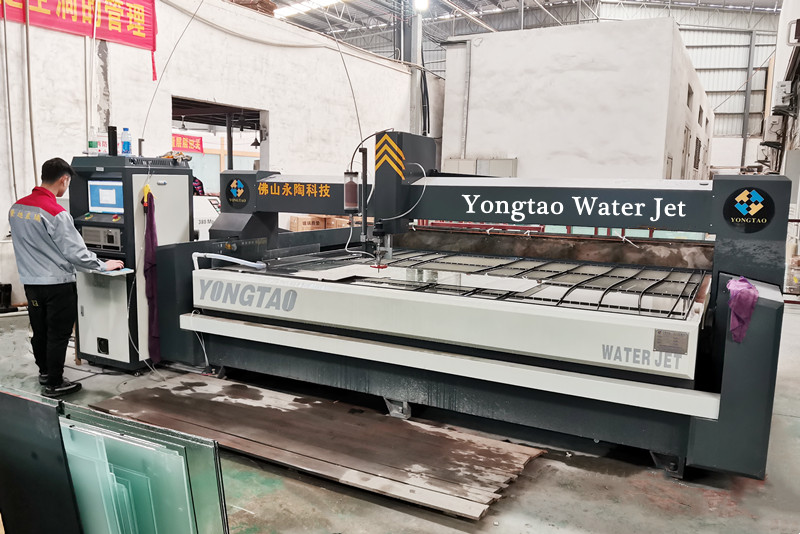
Selecting a cutting process is not simply a matter of asking which machine is faster or more accurate. The correct choice depends on the material, thickness, geometry, heat sensitivity, edge requirement, production volume and the operations that must follow cutting.
Waterjet, laser, plasma, electrical discharge machining, oxy-fuel cutting, sawing and milling remove material in fundamentally different ways. Each process has a practical operating range, and no single method is the best choice for every production task.
This guide compares these processes from an engineering and production-planning perspective. It focuses on how each method affects the workpiece, where each process performs well and which factors should be verified before a workshop selects a cutting method.
Waterjet cutting removes material by directing a high-velocity stream of water, or water mixed with abrasive particles, along a programmed path. It is a cold mechanical erosion process and does not rely on melting the workpiece, creating an electrical discharge or pressing a cutting tool against the edge.
Its main practical advantage is the ability to profile many different material classes without creating a conventional heat-affected zone. This makes it useful when thermal distortion, hardened edges, metallurgical changes, oxidation or heat damage must be controlled.
However, waterjet is not automatically the most economical process for every part. Laser may be more productive for repeated thin-sheet work, plasma may be more economical for fast cutting of conductive plate, EDM may provide better results for extremely precise conductive components, and sawing may be more efficient for simple straight cuts.
The best process is therefore the one that meets the complete production requirement at the lowest acceptable cost—not necessarily the one with the highest cutting speed.
| Process | Strongest Fit | Main Constraint |
|---|---|---|
| Waterjet | Mixed, thick or heat-sensitive materials | Abrasive use and slower cutting in some tasks |
| Laser | High-volume thin-sheet production | Thermal influence and material-dependent limits |
| Plasma | Fast cutting of conductive metal plate | Heat-affected edge and conductive materials only |
| Wire EDM | High-precision conductive components | Slower processing and conductive materials only |
| Oxy-fuel | Heavy carbon-steel plate | Narrow material range and high heat input |
| Sawing or milling | Straight cuts or machined 3D features | Tool contact, wear and geometry limitations |

Cutting technologies should be compared against the finished-part requirement rather than against one isolated machine specification.
A process that cuts quickly may still create additional grinding, deburring, heat treatment, straightening or inspection work. A slower process may deliver a near-net profile that shortens the remaining production route. The result depends on the entire workflow.
A meaningful comparison should consider:
Material type and physical properties
Material thickness and dimensional variation
Sensitivity to heat, oxidation or moisture
Required tolerance and repeatability
Allowable kerf taper and edge condition
Hole size, corner radius and feature geometry
Piercing requirements
Batch size and production volume
Programming and setup time
Consumables, energy and maintenance
Secondary finishing requirements
Operator skill and process control
Waste handling and workplace conditions
These factors explain why two workshops processing the same material may select different cutting technologies.
Understanding the material-removal mechanism makes it easier to predict the strengths and limitations of each process.
Pure-water cutting uses a high-velocity water stream to separate relatively soft materials. Abrasive waterjet cutting introduces mineral abrasive into the stream so that hard materials can be removed through controlled erosion.
Because the process does not melt the cutting zone, it avoids a conventional heat-affected zone. Cut quality nevertheless depends on pressure stability, water flow, orifice and mixing-tube condition, abrasive delivery, traverse speed, stand-off distance, piercing method and material behavior.
Laser cutting concentrates optical energy into a small area to heat, melt or vaporize material. Assist gas helps remove molten material from the kerf.
Modern laser systems can provide high cutting speed, narrow kerfs and fine features, especially when the material, thickness and production volume suit the selected laser source. Results depend on laser power, focus position, assist gas, surface condition, material properties and machine configuration.
Plasma cutting uses an electrically conductive, high-temperature gas jet to melt metal and expel material from the cut.
It is limited to electrically conductive materials but can provide high productivity across a broad range of metal thicknesses. Modern high-definition plasma systems can produce substantially better edge quality than older conventional plasma equipment, so plasma should not automatically be described as a low-precision process.
EDM removes conductive material through controlled electrical discharges between the workpiece and an electrode.
Wire EDM uses a continuously moving wire electrode to cut through a conductive workpiece. Sinker EDM uses a shaped electrode to form cavities or complex details. EDM is especially valuable for hardened conductive materials, fine features and demanding dimensional or surface-finish requirements.
Oxy-fuel cutting preheats suitable ferrous material and uses oxygen to support an exothermic reaction that removes the metal.
It is commonly associated with carbon-steel plate and can be practical for heavy sections. It is not a universal process for stainless steel, aluminum, stone, glass or other non-ferrous and non-metallic materials.
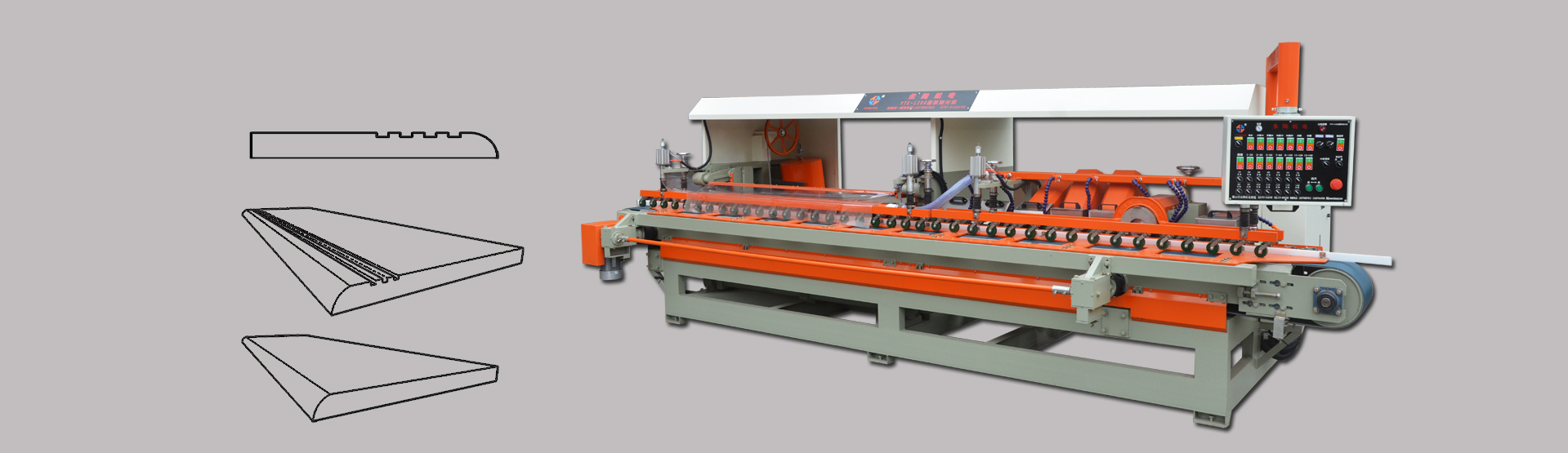
Sawing separates material through direct contact between the blade and the workpiece. Milling uses rotating cutting tools to remove material and produce profiles, pockets, holes and three-dimensional features.
Both processes can be highly productive when properly matched to the part, but tool wear, clamping force, vibration, chip control and access to the cutting path must be considered.
Waterjet and laser are both CNC-controlled profiling processes, but they interact with the workpiece differently.
Laser cutting is often preferred when a factory repeatedly processes suitable thin sheet and requires high throughput, narrow kerfs and small features. Automated loading, unloading and material handling can make laser especially productive in standardized sheet-metal production.
Waterjet becomes more attractive when the material must not be thermally altered, when the factory processes multiple material classes, or when thickness and material properties fall outside the preferred range of the available laser system.
Waterjet should be evaluated when:
The drawing prohibits or restricts a heat-affected zone
Heat could distort the workpiece or change edge properties
The material is thick, laminated or thermally sensitive
Different material classes must be processed on one cutting platform
Reflectivity or thermal conductivity complicates the laser process
A clean, mechanically eroded edge reduces subsequent preparation
The part requires controlled cutting without direct tool contact
The actual result still depends on piercing strategy, cutting parameters and machine condition. Fragile, brittle or laminated materials may require low-pressure piercing, edge starting, pilot holes or another controlled entry method.
Laser may be more suitable when:
Production is dominated by suitable thin sheet
High part volume makes cutting speed the main priority
Fine internal features and narrow kerfs are required
The material and surface condition are compatible with the laser source
Automated material handling is central to the production plan
The drawing permits the thermal characteristics of the laser-cut edge
The comparison should be based on current equipment capabilities. Modern fiber lasers can process materials that older laser systems handled poorly, including a wider range of non-ferrous metals. It is therefore inaccurate to claim that laser cutting generally cannot process aluminum or copper.
Choose laser for repeatable, high-speed sheet production when material and edge requirements suit a thermal process. Choose waterjet when material flexibility, thickness capability or the absence of a conventional heat-affected zone has greater value than maximum sheet-cutting speed.
Waterjet and plasma often compete in metal-profile cutting, but their suitable applications are different.
Plasma is a thermal process restricted to conductive materials. It can cut plate rapidly and may offer a lower initial investment than some other automated cutting systems. Waterjet processes material through erosion and is not limited to conductive metals.
Waterjet may be preferable when:
Thermal distortion or edge hardening is unacceptable
The workpiece is non-conductive
The same system must process metals and non-metals
The cut edge must be prepared for a heat-sensitive downstream process
Reducing dross, oxide or thermally affected material is important
Complex profiles must be produced in a thick or mixed-material workload
Waterjet can still produce kerf taper, drag lines or roughness if traverse speed and cutting energy are not matched correctly. “Cold cutting” should not be interpreted as a guarantee of perfect edge quality.
Plasma may be preferable when:
The workload consists mainly of conductive metal
High cutting speed is more important than eliminating thermal effects
Plate fabrication is performed at medium or heavy thicknesses
The specified tolerance can be achieved by the selected plasma system
Some dross removal or edge preparation is acceptable
Capital cost and production rate are major selection factors
Modern high-definition plasma equipment can produce accurate holes and good edge quality in suitable applications. Buyers should compare actual cut samples rather than relying on assumptions based on older plasma technology.
Choose plasma for productive and economical conductive-metal cutting when thermal effects are acceptable. Choose waterjet when the workpiece must remain free from a conventional heat-affected zone or when the workload includes non-conductive materials.
Waterjet cutting and wire EDM serve different accuracy, material and production requirements. Wire EDM is generally selected for demanding dimensional control, fine surface finish and intricate features in electrically conductive materials, while waterjet is commonly used for faster profiling across a broader range of materials.
Wire EDM is commonly selected for demanding accuracy, fine surface finish, hardened conductive materials and complex features that are difficult to produce with conventional machining. Waterjet normally provides faster rough profiling and broader material compatibility, but it should not be positioned as a universal replacement for precision EDM.
Waterjet may be more practical when:
The workpiece is not electrically conductive
The objective is rapid blanking or near-net profiling
Large profiles must be separated before finish machining
The required tolerance does not justify EDM cycle time
Avoiding an electrical or thermal erosion process is important
The factory processes widely different material classes
Wire EDM may be more suitable when:
The workpiece is electrically conductive
Very tight dimensional control is required
Small radii or intricate internal profiles are critical
The material is already hardened
A fine surface finish is required
The feature must be produced with minimal mechanical cutting force
Wire EDM normally requires a valid wire path through the workpiece. Some internal contours therefore require a prepared start hole, while an external profile can often be approached from an edge.
Use waterjet for flexible and efficient profiling when its achievable edge and tolerance meet the drawing. Use wire EDM when conductive-material precision, feature detail and surface condition are more important than cutting speed.
Oxy-fuel and waterjet are both used for thick-section cutting, but their material ranges and edge characteristics differ substantially.
Waterjet may be preferred when:
The material is not suitable for oxy-fuel cutting
Heat input must be avoided
The part requires a relatively narrow and controlled profile
The workshop processes metal and non-metal materials
Thermally induced distortion would affect downstream machining
Oxy-fuel may be preferred when:
Heavy carbon-steel plate is the primary workload
The required profile is relatively simple
Cutting cost is more important than eliminating thermal effects
The production environment can safely manage flame, fumes and hot material
Subsequent machining or edge preparation is already planned
Oxy-fuel should not be evaluated as a direct substitute for every abrasive waterjet application because it serves a much narrower material range.
Sawing and milling remain important because not every part requires contour cutting with a waterjet, laser or plasma system.
Sawing can be highly economical for straight separation cuts, bars, blocks and repeated length cutting. A saw blade provides a simple production route when complex contours are unnecessary.
Waterjet becomes more useful when the workpiece requires curves, internal profiles, nested parts or frequent geometry changes. It also avoids blade-to-workpiece cutting contact, although the part must still be supported and controlled during piercing and separation.
Milling can produce pockets, threads, controlled-depth features, finished holes and three-dimensional surfaces that a standard two-dimensional waterjet operation cannot complete.
Waterjet is often used before milling to produce a near-net blank. This can reduce the volume of material removed by cutting tools and preserve expensive stock for other parts. The milled operation can then establish critical datums, bores, threads and finished surfaces.
Use sawing for efficient straight separation. Use milling when the part requires depth-controlled or three-dimensional features. Use waterjet for flexible two-dimensional profiling, or combine waterjet blanking with finish machining.
The distinction between cold and thermal cutting is important, but it should not be oversimplified.
Waterjet cutting does not create a conventional heat-affected zone because material removal is based on erosion rather than melting. This can help preserve heat treatment, coating condition and base-material properties near the cut.
Laser, plasma and oxy-fuel processes intentionally apply heat. Depending on the material and parameters, this may produce oxidation, recast material, hardness changes, residual stress, distortion or a heat-affected zone.
However, a cold process is not automatically the best process. Waterjet can introduce other production considerations, including moisture, abrasive contamination, kerf taper, abrasive disposal, noise, high-pressure-component maintenance and slower cutting under certain conditions.
The correct question is not “Is cold cutting better?” It is “Which process changes are acceptable for this specific part and its next production stage?”
A structured selection sequence is more reliable than comparing machine advertisements.
Identify the exact material grade, structure, coating, heat treatment and conductivity. Do not make the decision from a general label such as “metal,” “stone” or “composite.”
Record the normal thickness, maximum thickness, sheet or slab dimensions and expected dimensional variation. A process suitable for thin stock may not remain economical as thickness increases.
Specify dimensional tolerance, edge finish, perpendicularity, corner radius, hole quality and whether a machined datum is required. Separate essential drawing requirements from cosmetic preferences.
Determine whether the part allows heat input, oxidation, moisture, mechanical force, abrasive contact, burrs, dross or a recast layer.
A flexible process may be ideal for prototypes and mixed batches, while a highly automated process may provide lower unit cost for repeated high-volume production.
Estimate grinding, deburring, straightening, heat treatment, cleaning, milling, inspection and handling after cutting. These operations may change the apparent cost advantage of the fastest cutting method.
Calculate cost using accepted parts rather than machine running time alone. Include:
Programming and setup
Cutting time
Consumables
Energy and utilities
Operator involvement
Maintenance allowance
Material utilization
Secondary finishing
Inspection
Scrap and rework
Use representative material, thickness and geometry. A thin demonstration coupon is not sufficient if the production part contains small holes, sharp corners, long contours, brittle areas or varying thickness.
A test cut should reproduce the most difficult features of the planned part rather than merely show that the material can be separated.
Include:
The actual material grade and thickness
The smallest required internal feature
The longest critical edge
Representative corners and curves
At least one normal piercing location
Any fragile or laminated region
The required production-quality setting
After cutting, inspect:
Top and bottom dimensions
Kerf width and taper
Edge roughness and drag lines
Burr, dross, chipping or delamination
Thermal or metallurgical effects where applicable
Hole shape and corner condition
Part flatness
Cleaning and finishing time
Cutting time and consumable use
A process should only be approved when the sample meets the drawing and production-cost target under repeatable conditions.
For workshops that have confirmed that cold abrasive cutting is suitable for their production task, available industrial waterjet system configurations can be compared according to workpiece size, axis requirements, material thickness and expected production capacity.
Cutting speed alone can produce a misleading comparison.
For example, a thermal process may separate a metal part faster, but the edge may require grinding before welding, coating or precision machining. Waterjet may cut more slowly while reducing thermal edge preparation. In another application, laser may produce a finished thin-sheet part so quickly that waterjet provides no economic advantage.
The same principle applies to near-net blanks. Waterjet can remove the majority of unwanted stock, while milling establishes the final tolerance and surface finish. This hybrid route may reduce machining time without requiring the waterjet to perform a finish-machining function.
The most useful comparison is therefore:
Total production time = programming + setup + cutting + handling + finishing + inspection + rework
A technically balanced comparison should include the limitations of waterjet processing.
Potential considerations include:
Cutting speed may decrease as thickness or required edge quality increases
Abrasive cutting creates a consumable and waste-management requirement
Worn or mismatched nozzle components can increase kerf variation
Excessive traverse speed can create taper and pronounced drag lines
Piercing can damage brittle or laminated materials if not controlled
Water exposure may be unsuitable for some moisture-sensitive workpieces
Catch-tank maintenance and abrasive removal require planning
High-pressure components require scheduled inspection and replacement
Very small precision features may be better produced by another process
Final machined tolerances may still require milling, grinding or EDM
These limitations do not make waterjet unsuitable. They define the conditions that must be managed during process selection.
Prioritize waterjet when material flexibility, thick-section profiling, cold cutting or reduced thermal influence is more important than maximum thin-sheet speed.
Prioritize laser when suitable thin-sheet material, fine features, automation and high repeated-part throughput define the production requirement.
Prioritize plasma when conductive-metal cutting speed, plate productivity and competitive equipment cost are more important than eliminating thermal effects.
Prioritize wire EDM when conductive-material precision, fine feature control and surface condition justify a slower specialized process.
Prioritize oxy-fuel for suitable heavy carbon-steel work where simple profiles and economical thick-section cutting are the main objectives.
Prioritize sawing for simple straight separation and milling for depth-controlled features, holes, threads, pockets or finished three-dimensional geometry.
Before approving a process, confirm the following:
Can it process the exact material and thickness?
Does it meet the drawing rather than only separate the material?
Are its heat, moisture and edge effects acceptable?
Can it produce the smallest required feature?
Does it support the expected batch size?
What secondary operations remain?
What is the cost per accepted part?
Can the supplier demonstrate the result on representative material?
Are consumables and service support available?
Can the process remain stable during normal production?
When the answers are documented, the selection becomes an engineering decision rather than a general comparison of machine features.
Neither process is universally better. Waterjet is often selected for thick, mixed or heat-sensitive materials and applications that restrict a conventional heat-affected zone. Laser is often more productive for repeated thin-sheet work requiring high speed and fine features. The material, thickness, quality requirement and production volume should determine the choice.
Waterjet can provide high-quality profiles without thermal distortion, but accuracy depends on machine motion, cutting-head condition, traverse speed, material thickness and taper control. Modern high-definition plasma systems can also achieve good accuracy in suitable conductive metals. The correct comparison should use actual cut samples and drawing tolerances.
Generally, wire EDM is selected for more demanding dimensional accuracy, small features and fine surface finish in conductive materials. Waterjet usually offers faster profiling and broader material compatibility, but it should not be described as universally more accurate than wire EDM.
Waterjet is often evaluated first because it removes material without creating a conventional heat-affected zone. However, the workpiece must also tolerate water exposure, piercing force and any abrasive contamination. A representative test cut should confirm suitability.
The answer depends on metal type, thickness, tolerance, edge requirement and production rate. Waterjet provides cold cutting and broad metal compatibility. Plasma can offer high productivity on conductive plate. Oxy-fuel can be economical for heavy carbon steel. Laser suitability depends on system power and the specific material.
Not always. A properly configured process can produce a near-net edge and reduce finishing, but secondary machining may still be required for critical dimensions, bores, threads, sealing surfaces or demanding surface-finish requirements.
No. Plasma may have lower cutting cost in many conductive-metal applications, but the final comparison must include edge preparation, distortion correction, grinding, scrap and downstream operations. Waterjet can be more economical when avoiding thermal effects reduces later work.
Yes. Many production environments use complementary technologies. Waterjet may produce a near-net blank, laser or plasma may handle high-volume sheet work, and milling or EDM may complete critical features. The objective is to assign each operation to the most suitable process.
Provide the exact material grade, thickness, workpiece size, drawing, tolerance, edge requirement, batch quantity and prohibited process effects. Without this information, any recommendation is only preliminary.
Request a trial cut using representative production material and include the most difficult features from the actual part. Inspect dimensions, taper, edge condition, piercing damage, finishing time and consumable use before approving the process.
This guide was reviewed by the Yongtao Machinery technical team based on industrial waterjet configuration, material test-cut evaluation and cutting-process planning experience. Final process selection and operating parameters should always be verified using the actual material grade, thickness, part geometry, quality requirement and production conditions.
0086-18665475362
[email protected]
Road 3, Wuzhuang Xiaofengtian Ind. Zone, Luocun Town, Nanhai Dist., Foshan, Guangdong, China