

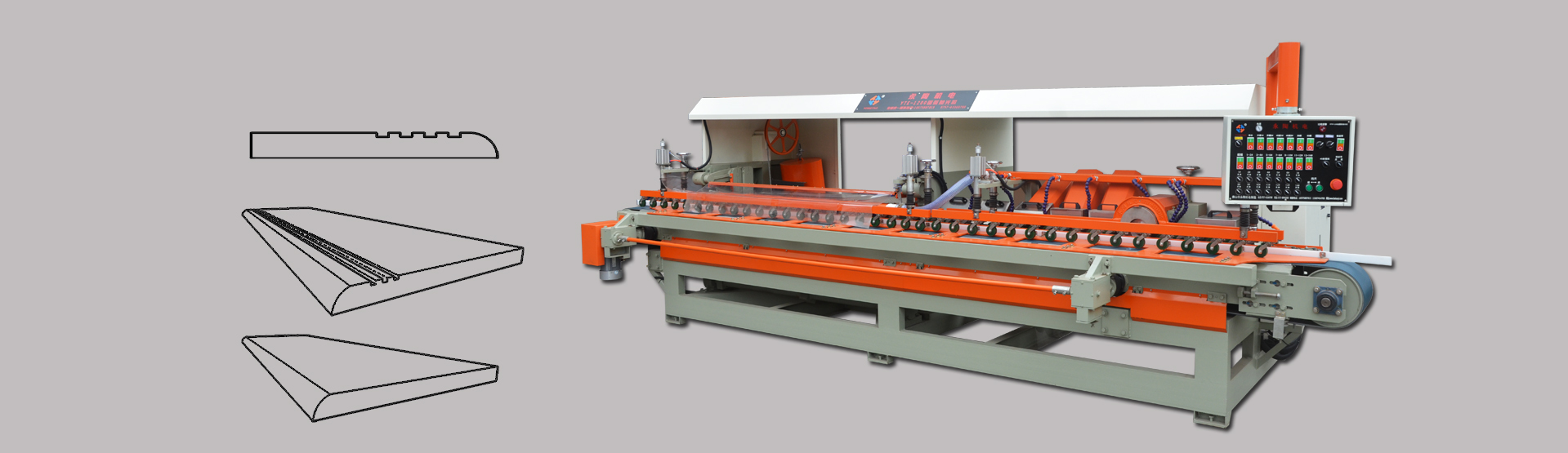
Waterjet cutting is used when a manufacturer needs to separate, profile or pierce a material without applying a conventional heat source to the cutting zone. Its practical value is not simply that it can process many materials. The more important question is whether the waterjet process matches the material behavior, part geometry, edge requirement and production target of a specific job.
Pure waterjet cutting uses a concentrated high-velocity water stream for soft or easily penetrated materials. Abrasive waterjet cutting introduces mineral abrasive into the stream to process harder materials such as steel, aluminum, titanium, stone, ceramic and glass.
A suitable application depends on more than material name. Thickness, hardness, brittleness, laminate structure, required tolerance, edge quality, piercing position, downstream processing and batch size should all be evaluated before production begins.
Waterjet cutting is primarily used for cold profiling of flat sheets, plates, slabs, panels, laminates and selected three-dimensional parts. Common applications include:
Cutting steel, stainless steel, aluminum, copper and titanium parts.
Producing stone inlays, countertop openings, floor patterns and decorative panels.
Cutting ceramic tile, porcelain and sintered stone into custom contours.
Processing non-tempered glass with controlled piercing conditions.
Trimming carbon-fiber, fiberglass and laminated composite components.
Slitting rubber, foam, textiles, insulation and packaging materials.
Producing gaskets, seals, machine covers, brackets, flanges and custom panels.
Pre-cutting near-net shapes before machining, welding, bending or finishing.
The correct process should be selected according to the workpiece. Pure waterjet is generally intended for softer materials, while abrasive waterjet is used when the water stream alone cannot remove material at a practical rate.
The main function of industrial waterjet cutting is to convert hydraulic pressure into a narrow, high-velocity cutting stream and direct that energy along a programmed path.
In pure waterjet cutting, the water stream performs the cutting action directly. In abrasive waterjet cutting, the high-speed water accelerates abrasive particles through a mixing tube. These particles erode the workpiece and form the kerf.
This process can perform several production functions:
Separate a finished part from a sheet, plate or slab.
Produce external profiles and internal contours.
Pierce starter holes where the material permits direct piercing.
Cut curves, slots and irregular geometries from CAD drawings.
Create miters or bevels when a suitable multi-axis cutting head is used.
Produce near-net blanks for later machining or finishing.
Reduce thermal preparation work before welding or forming.
Waterjet cutting is therefore better understood as a programmable material-separation process rather than as a universal replacement for every saw, laser, plasma cutter or machining center.
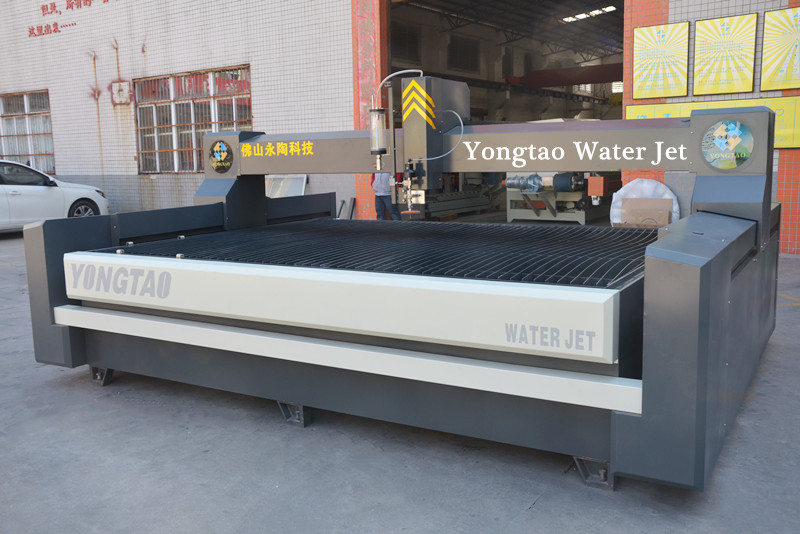
Pure waterjet cutting is generally used for soft, flexible, fibrous or low-density materials that can be separated without mineral abrasive.
Typical materials include:
Rubber
Foam
Sponge
Fabric
Textiles
Leather
Paper products
Corrugated board
Soft plastics
Insulation materials
Selected food products on purpose-designed systems
Pure waterjet produces a narrow stream and does not introduce garnet into the workpiece. This can be important when abrasive contamination is unacceptable or when the material is too soft to require abrasive cutting.
Material compression, water absorption, layer movement and workpiece support must still be evaluated. A multilayer fabric stack, for example, may shift during cutting if it is not held correctly.
Abrasive waterjet is used for harder and denser materials that cannot be cut efficiently by water alone.
Typical materials include:
Carbon steel
Stainless steel
Aluminum
Copper and brass
Titanium and nickel alloys
Marble and granite
Quartz and engineered stone
Ceramic tile and porcelain
Sintered stone
Non-tempered glass
Carbon-fiber composites
Fiberglass
Laminated panels
Hard plastics
The abrasive type, mesh size, flow rate, orifice, mixing-tube diameter, pressure and traverse speed must work as a coordinated process. Adding more abrasive does not automatically improve cutting performance. Excessive abrasive can reduce acceleration efficiency, increase consumption and accelerate component wear.
A material may be technically cuttable but still be unsuitable for a particular production target. The following checks provide a more reliable application assessment.
Identify the material type, grade, hardness, thickness and internal structure. Laminated, brittle, porous or pre-stressed materials may require special piercing and support methods.
The operator should also check whether the workpiece contains:
Voids or internal cracks
Protective films
Adhesive layers
Reinforcement fibers
Surface coatings
Residual stress
Uneven thickness
These conditions can affect piercing stability, edge quality and the path of the cutting stream.
Waterjet cutting is well suited to programmed profiles, curves, holes and irregular shapes. However, feature size must be realistic in relation to kerf width, material thickness and jet behavior.
Small holes, narrow slots, sharp internal corners and thin bridges require additional review. A drawing may be geometrically valid in CAD but difficult to reproduce at the required tolerance after piercing and kerf compensation.
Edge quality is directly related to traverse speed, material thickness, pressure stability, abrasive delivery and cutting-head condition.
A faster cut may produce more visible striations or taper. A slower finishing cut can improve the lower part of the edge, but it increases cycle time and cost.
The required condition should therefore be defined before programming:
Separation cut
General production edge
Visible finished edge
Edge for welding
Edge for bending
Near-net edge for later machining
Dimensionally controlled finished profile
The highest available edge-quality setting is not necessary for every contour.
Piercing often creates a higher local load than continuous profile cutting. Brittle, laminated or fragile materials may crack, chip or delaminate when pierced at full operating pressure.
Possible strategies include:
Starting outside the finished contour
Using a lead-in from the material edge
Applying low-pressure piercing
Using dynamic or circular piercing
Pre-drilling a starter hole
Piercing in a scrap area
The best method depends on material behavior, thickness and finished-part requirements.
Waterjet cutting is valuable for prototypes, customized parts, mixed materials and small-to-medium production batches because tooling changes are limited.
For very high-volume production of one simple component, a dedicated press tool, saw line or other specialized process may provide a lower unit cost. Waterjet suitability should therefore be judged by total workflow, not only by whether the jet can penetrate the material.
Abrasive waterjet is used in metal fabrication to produce plates, brackets, flanges, covers, panels, machine components and near-net blanks.
Common metals include carbon steel, stainless steel, aluminum, copper, brass and titanium. Because the process does not depend on melting the workpiece, it is useful for reflective metals, dissimilar alloys and materials whose properties could be affected by a thermal cutting zone.
Typical applications include:
Equipment mounting plates
Structural brackets
Machine guards
Electrical panels
Custom flanges
Base plates
Decorative metal panels
Preforms for machining
The finished tolerance and edge condition still depend on material thickness, cutting speed, machine condition, kerf compensation and inspection method. Waterjet cutting should not automatically be described as a substitute for final precision machining.
Aerospace production involves aluminum alloys, titanium, stainless steel, carbon-fiber composites, fiberglass and laminated structures. Waterjet cutting may be selected when thermal effects, resin melting, tool loading or cutting flexibility are important concerns.
Potential applications include:
Composite panel trimming
Interior panel production
Titanium and aluminum blanks
Insulation components
Gaskets and seals
Prototype structural parts
Near-net shapes for later machining
Composite applications require careful piercing and support. A poorly selected piercing method can force water between layers and cause delamination. When the finished component is safety-critical, the waterjet operation must remain part of a validated manufacturing and inspection process.
Abrasive waterjet is widely used to process marble, granite, quartz, engineered stone and selected sintered materials.
Common applications include:
Countertop sink openings
Faucet holes
Curved countertop profiles
Floor medallions
Stone inlays
Decorative wall panels
Mosaic components
Custom architectural shapes
Waterjet is especially useful when a saw blade cannot efficiently reproduce a narrow curve, internal contour or detailed inlay pattern.
The operator must consider slab support, existing cracks, resin-filled areas, material porosity and piercing distance from the finished edge. Thick or fragile slabs may require an entry point outside the finished contour.
Ceramic and sintered materials are hard and brittle. Abrasive waterjet can produce custom contours without using a shaped cutting tool, but the process must be adapted to the fracture behavior of the material.
Typical applications include:
Custom floor patterns
Wall-panel profiles
Decorative inserts
Openings for fixtures
Curved tile components
Mosaic pieces
Architectural panels
Abrasive selection, support spacing, piercing pressure and lead-in position are particularly important. Test cutting is recommended before batch production because products sold under the same general material name may have different body structures and surface layers.
Waterjet can process many types of non-tempered glass, but glass condition must be confirmed before cutting.
Typical applications include:
Architectural glass profiles
Holes and openings
Decorative panels
Mirror shapes
Laminated glass components
Custom display parts
Tempered glass should not be treated as a normal waterjet application because disturbing its stressed structure can cause the entire panel to fracture. Unknown glass should be identified before piercing.
For suitable glass, low-pressure piercing, edge entry or a pre-drilled starter hole may reduce cracking risk. Finished holes should also maintain a practical distance from panel edges and existing defects.
Waterjet cutting is used for both soft and hard materials in transportation manufacturing.
Applications may include:
Interior carpets
Acoustic insulation
Foam components
Rubber seals
Composite panels
Metal brackets
Prototype body components
Customized trim parts
Pure waterjet can cut soft interior materials, while abrasive waterjet can process metal or composite components. This allows related production tasks to use the same underlying cutting principle, although the cutting heads and process settings may differ.
Pure waterjet is suitable for many flexible materials because it does not use a blade that becomes dull or pulls the workpiece along the cutting direction.
Typical products include:
Industrial gaskets
Rubber seals
Foam inserts
Packaging liners
Vibration-control pads
Insulation profiles
Protective layers
Thin flexible sheets must be held flat. For stacked cutting, the operator should verify whether the layers remain aligned and whether the bottom layer receives the same dimensional result as the top layer.
Pure waterjet can cut fabrics, leather, carpets and multilayer textile stacks. It may reduce mechanical dragging and tool wear compared with blade cutting.
Applications include:
Automotive interior fabrics
Furniture upholstery
Carpet components
Industrial textiles
Protective fabric layers
Custom leather profiles
Water absorption and drying requirements should be considered. Materials that swell, stain or lose their surface treatment after wetting may require another cutting method.
Waterjet technology has been used for slitting paper and board products because the cutting action can reduce airborne dust compared with some mechanical methods.
Potential uses include:
Paper slitting
Corrugated-board profiling
Packaging inserts
Fiberboard components
Custom protective packaging
Process selection must account for moisture sensitivity. Waterjet is not appropriate when the product cannot tolerate any water contact or when drying would add unacceptable time and cost.
Waterjet can profile selected electrical insulation boards, composite panels, equipment covers and non-sensitive technical materials.
Before processing an electronic or laminated component, confirm:
Whether water can enter internal layers
Whether conductive residue is acceptable
Whether the material contains hazardous substances
Whether abrasive can remain in holes or cavities
Whether the finished part requires drying or cleaning
Completed electronic assemblies should not be assumed to be suitable merely because the substrate can be cut.
Waterjet removes material through erosion rather than melting. This helps maintain the original thermal condition of the area beside the kerf.
This benefit is valuable for heat-sensitive metals, laminated materials and components that will later be welded, formed or machined. It does not mean that every finished edge automatically meets the requirements of the next operation; inspection and preparation may still be necessary.
Abrasive waterjet can process metals, stone, ceramic, glass and composites without changing to a material-specific saw blade for every contour. This is useful for workshops handling customized work or frequent material changes.
The cutting parameters, abrasive conditions and piercing method must still be adjusted for each material.
CNC-controlled waterjet systems can follow programmed straight lines, curves, holes and complex contours. Design changes can often be introduced through the drawing and cutting program instead of manufacturing a new hard tool.
This flexibility is especially useful for prototypes, custom production and short batches.
The cutting head does not press a solid blade directly against the workpiece. This can reduce mechanical cutting forces, although the material must still be supported against vibration, movement and the reaction of the jet.
Parts can be arranged closely in a sheet or slab when kerf width, part stability and cutting sequence permit. Effective nesting can reduce offcut waste, but very small distances between parts may cause movement or damage after contours are released.
A professional application guide should explain where the process is unsuitable or requires caution.
For thin sheet metal and high-volume straight cutting, laser cutting, punching or another dedicated process may provide shorter cycle times. Waterjet becomes more competitive when material thickness, heat sensitivity, mixed materials or complex geometry changes the production requirement.
Increasing traverse speed generally reduces cycle time but may increase taper, lag and lower-edge striations. The correct balance depends on whether the contour is a rough blank or a finished feature.
Abrasive waterjet requires garnet or another suitable abrasive, which becomes part of the tank waste after cutting. Consumption, removal, recycling possibilities and local disposal requirements should be considered when calculating operating cost.
Small components may tip, fall between slats or be struck by the cutting head. Cutting sequence, tabs, bridges, support condition and catch-tank clearance should be planned before starting the program.
Examples include:
Tempered glass
Diamond and materials harder than the selected abrasive
Water-sensitive products
Highly porous materials
Unknown laminated panels
Materials that release hazardous substances when eroded
Components containing sealed electrical or mechanical assemblies
A sample cut should be performed when the material structure or cutting behavior is uncertain.
A standard vertical cutting head is suitable for most flat-part applications involving straight cuts, curves, holes and external contours.
It is generally appropriate when the finished part does not require a bevel and when the permitted taper can be controlled through process parameters or later finishing.
A small-angle compensation head can adjust the jet direction to reduce the dimensional difference between the upper and lower edges of the kerf.
This may be useful for fitted components, visible edges and parts requiring improved wall consistency. Compensation must be calibrated for the actual material, thickness and cutting condition.
A multi-axis head with a wider angular range may be used for stone miters, weld-preparation bevels and other angled profiles.
Before selecting this configuration, confirm:
Required bevel angle
Material thickness
Finished-part drawing
Cutting-head clearance
Collision risk
Fixturing method
Whether the underside geometry is accessible
A five-axis configuration should be selected because the finished part requires angular cutting, not simply because it has more axes.
Before approving a job for waterjet production, confirm the following information:
What is the exact material and grade?
What are the minimum, nominal and maximum thicknesses?
Is the material brittle, laminated, porous or water-sensitive?
What is the maximum workpiece size?
Which contours require direct piercing?
Can piercing begin in a scrap area or outside the profile?
What tolerance applies to each critical feature?
What edge condition is acceptable?
Will the part be welded, bent, polished or machined afterward?
Are narrow slots, small holes or thin bridges present?
Can small cutouts fall safely into the tank?
Is vertical cutting sufficient, or is a bevel required?
What is the planned batch quantity?
Is a first-part inspection required?
How will abrasive waste and process water be managed?
This information is more useful than selecting the process from material name alone.
After confirming the material, part geometry and cutting requirements, manufacturers can compare suitable 3-axis and 5-axis waterjet system configurations for the planned production task.
When a new material or part is introduced, begin with a controlled test rather than using unverified production settings.
Record the supplier, grade, thickness, surface condition and any visible defects.
Identify critical dimensions, small features, piercing points, finished surfaces and downstream operations.
Choose pure or abrasive waterjet, vertical or angled cutting, and the appropriate piercing method.
The sample should include a straight edge, curve, internal corner, hole and other important features from the actual part.
Check the top and bottom dimensions, kerf condition, taper, edge striations, chipping, delamination and surface damage.
Change traverse speed, pressure, abrasive flow, piercing method or compensation systematically. Avoid changing several variables together because the cause of improvement or deterioration will become unclear.
Record the settings, consumable condition, material information and inspection results so that the process can be repeated for the next batch.
Waterjet cutting applications range from soft rubber and textiles to metal plate, stone, ceramic, glass and advanced composites. However, the ability to penetrate a material is only the first part of application selection.
A successful process must also produce the required geometry, tolerance and edge condition at an acceptable cycle time and operating cost. Material structure, piercing method, abrasive delivery, traverse speed, support condition, cutting sequence and inspection requirements all influence the final result.
Manufacturers should evaluate the actual part drawing and material sample before selecting the process or system configuration. When these requirements are confirmed, waterjet can provide a flexible cold-cutting solution for complex profiles, mixed materials, customized production and applications where conventional thermal cutting is unsuitable.
Common applications include metal brackets and plates, stone countertop openings, ceramic patterns, glass profiles, composite-panel trimming, rubber gaskets, foam inserts and custom parts produced from flat sheet or slab material.
Pure waterjet uses only a high-velocity water stream and is generally used for soft materials such as rubber, foam, fabric and paper. Abrasive waterjet adds mineral particles to the stream and is used for harder materials such as metal, stone, ceramic and glass.
No. Material structure and condition must be checked before cutting. Tempered glass normally fractures when disturbed, diamond is harder than commonly used garnet abrasive, and water-sensitive or hazardous materials may be unsuitable.
Abrasive waterjet can process thick metal, but practical thickness depends on the alloy, pressure, abrasive delivery, nozzle condition, required edge quality and acceptable cutting speed. A sample cut is recommended before confirming production capability.
Waterjet is an erosion-based cold-cutting process and does not create the conventional heat-affected zone associated with thermal cutting. However, the finished edge should still be inspected according to the drawing and downstream manufacturing requirements.
Waterjet can trim many carbon-fiber composites, but delamination may occur if piercing and support are not properly controlled. Edge entry, reduced-pressure piercing or a pre-drilled starter hole may be required.
It can cut many types of non-tempered glass when appropriate support and piercing methods are used. Tempered glass is generally unsuitable because disturbing its internal stress can cause the panel to shatter.
Yes, abrasive waterjet can produce curves, openings and custom profiles in many ceramic and sintered materials. Because these materials are brittle, the operator should test the piercing method, support condition and cutting parameters before batch production.
Waterjet should be considered when the material is heat-sensitive, thick, reflective, laminated or unsuitable for melting. It is also useful when a workshop processes several material groups. Laser or plasma may be faster for some thin-metal production tasks.
No. Standard vertical cutting is sufficient for most two-dimensional profiles. A compensation or wider-angle head is only required when the finished part needs improved taper control, bevels, miters or other angled edges.
Provide the material grade, thickness, workpiece size, drawing, tolerance, edge-quality requirement, batch quantity and downstream operations. A representative sample cut and first-part inspection provide stronger evidence than a general material list.
Provide the material name and grade, thickness, maximum sheet or slab size, CAD drawing, critical dimensions, required edge condition, cutting angle, batch quantity and photographs of the material. If possible, supply a representative sample from the same production lot.
 0086-18665475362
[email protected]
Road 3, Wuzhuang Xiaofengtian Ind. Zone, Luocun Town, Nanhai Dist., Foshan, Guangdong, China
 0086-18665475362
 [email protected]
 Road 3, Wuzhuang Xiaofengtian Ind. Zone, Luocun Town, Nanhai Dist., Foshan, Guangdong, China
 English
 Español