High-pressure waterjet cutting is a cold cutting technology that uses a concentrated high-speed water stream to process different industrial materials. When abrasive particles are added to the water stream, the cutting capability becomes stronger and the process can handle hard materials such as metal, stone, ceramic, glass, quartz, and composite materials.
Unlike thermal cutting methods, high-pressure waterjet cutting does not create heat-affected zones, burning marks, or thermal deformation. This makes it suitable for materials that require clean edges, stable accuracy, and minimal secondary finishing.
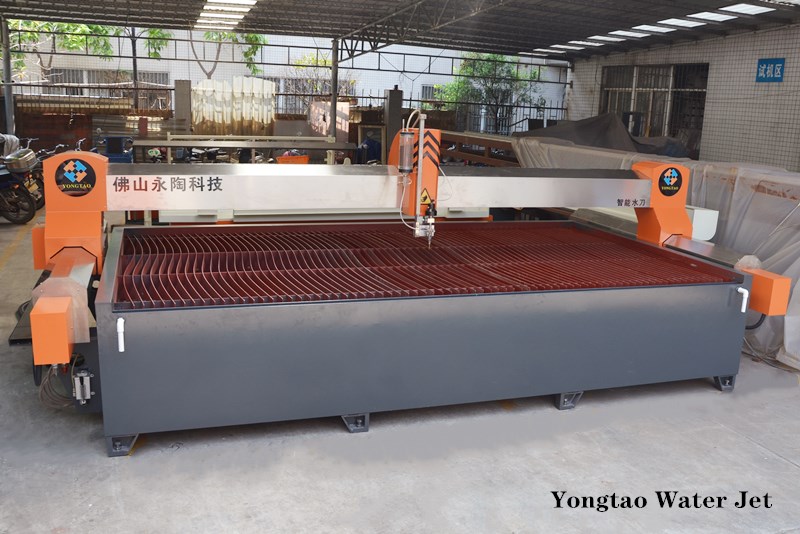
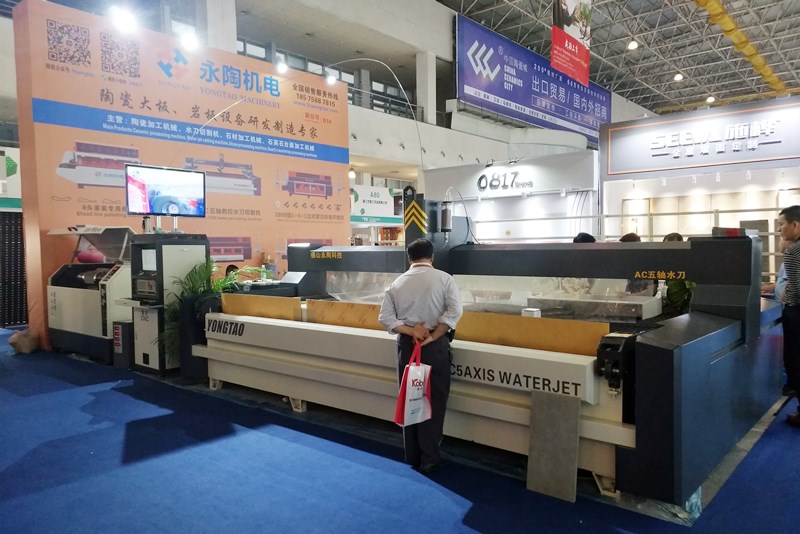
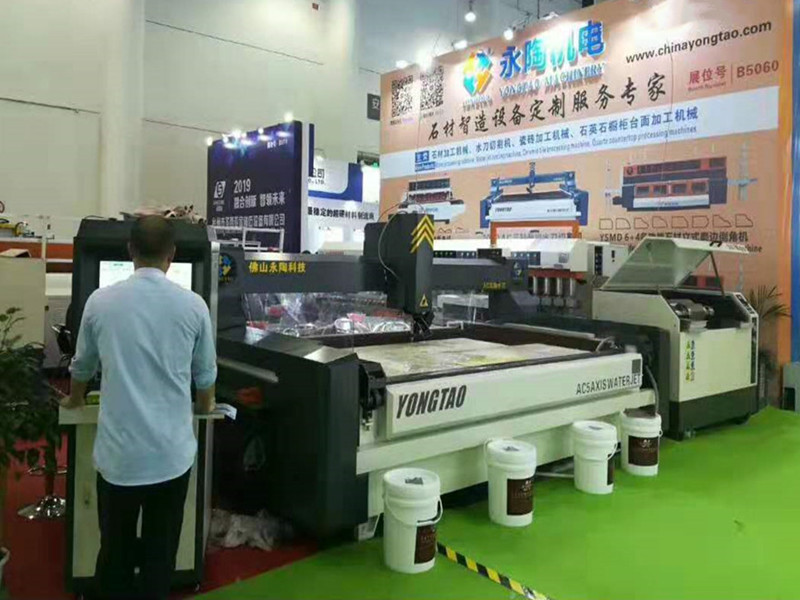
For buyers who need complete machine models, table sizes, 3-axis or 5-axis configurations, please visit Yongtao’s Water Jet Cutting Machine category.
High-pressure waterjet cutting uses a high-pressure pump to pressurize water and force it through a small orifice. The water stream exits at extremely high speed and creates strong cutting energy. For soft materials, pure water cutting may be sufficient. For hard materials, abrasive particles are mixed into the water stream to improve cutting power.
The cutting process is controlled by CNC software, allowing the cutting head to follow programmed paths accurately. This makes the technology suitable for straight cutting, curve cutting, hole cutting, special-shaped cutting, and complex contour processing.

High-pressure waterjet technology can be divided into pure water cutting and abrasive waterjet cutting.
Pure water cutting uses only high-pressure water. It is mainly used for softer materials such as rubber, foam, gasket materials, plastics, leather, paper products, and some non-metal materials. The cutting process is clean and does not require abrasive particles.
Abrasive waterjet cutting adds abrasive particles into the high-pressure water stream. This method is suitable for hard materials such as stainless steel, aluminum, titanium, copper, granite, marble, ceramic, porcelain, glass, and quartz. Abrasive cutting provides stronger cutting capability and is widely used in industrial manufacturing and material processing.
Pressure is one of the key factors that affects cutting speed, cutting capability, edge quality, and operating efficiency. Higher pressure can increase the energy of the waterjet stream, allowing the system to cut harder or thicker materials more effectively.
However, pressure alone does not determine the final cutting result. Cutting quality also depends on abrasive flow, nozzle condition, cutting speed, material thickness, CNC motion accuracy, and operator settings. A stable high-pressure system is more important than simply increasing pressure without proper parameter control.
Stable pressure control is essential for consistent cutting performance. If pressure fluctuates during operation, the cutting edge may become uneven, the cutting path may lose accuracy, or the material may not be fully cut through.
Operators should monitor pressure stability during production. The high-pressure pump, seals, pipes, fittings, cutting head, orifice, and abrasive tube should be checked regularly. Stable pressure helps improve cutting consistency, reduce material waste, and maintain reliable production output.

High-pressure waterjet cutting is widely used because it can process many different materials without changing the basic cutting principle.
Common materials include:
Metal materials: stainless steel, carbon steel, aluminum, copper, brass, titanium, and alloy materials.
Stone materials: marble, granite, quartz, artificial stone, and other decorative stone slabs.
Ceramic materials: ceramic tile, porcelain tile, sintered stone, and large-format panels.
Glass materials: laminated glass, decorative glass, architectural glass, and industrial glass panels.
Composite materials: carbon fiber, fiberglass, rubber, plastics, and multi-layer industrial materials.
Because the process is cold cutting, it helps preserve material structure and reduce the risk of heat-related damage.
High-pressure waterjet cutting provides several important advantages for industrial production.
First, it supports cold cutting without thermal deformation. This is especially useful for materials that are sensitive to heat or require clean surface quality.
Second, it can cut a wide range of materials. One cutting process can be applied to metal, stone, ceramic, glass, quartz, composites, and other industrial materials.
Third, it supports complex shapes. CNC control allows accurate cutting of curves, holes, patterns, and irregular contours.
Fourth, it reduces secondary finishing. Clean cutting edges can help reduce grinding, polishing, or rework in many applications.
Fifth, it improves material utilization. Narrow cutting kerf and precise cutting paths help reduce waste during production.

High-pressure waterjet cutting is used in many industries because of its flexibility and material adaptability.
In metal fabrication, it is used for stainless steel parts, aluminum components, copper parts, titanium panels, mechanical parts, and customized metal profiles.
In stone processing, it is used for marble, granite, quartz, countertop openings, decorative panels, sink holes, and special-shaped stone cutting.
In ceramic and sintered stone processing, it is used for tile cutting, slab cutting, hole cutting, pattern cutting, and customized panel processing.
In glass fabrication, it is used for glass panels, decorative shapes, holes, curves, and special designs where clean cutting and stable control are required.
In custom manufacturing, it is used for small-batch production, prototyping, sample cutting, and non-standard material processing.
For a more detailed explanation of how this technology is used across different materials and industries, read our guide to industrial applications of high-pressure waterjet cutting.
Good cutting results depend on several factors working together.
Water pressure must be stable and suitable for the material. Abrasive flow must be adjusted according to material hardness and thickness. Cutting speed must match the required edge quality. The nozzle and abrasive tube must be in good condition. The cutting path must be properly programmed through CNC software.
If any of these factors are not controlled correctly, cutting quality may decline. Common problems include rough edges, incomplete cutting, excessive taper, material chipping, or reduced dimensional accuracy.
High-pressure waterjet systems require regular maintenance to keep stable operation. Operators should inspect the high-pressure pump, seals, pipes, fittings, filters, cooling system, abrasive supply line, nozzle, orifice, and cutting head.
Worn parts should be replaced in time. If the system continues running with worn seals, damaged nozzles, or unstable pressure, cutting quality may decrease and maintenance cost may increase.
A regular maintenance plan helps improve safety, reduce downtime, extend component service life, and maintain long-term production efficiency.
Different materials require different cutting parameters. Operators should adjust pressure, abrasive flow, cutting speed, pierce time, and cutting path according to material type, thickness, hardness, and edge quality requirements.
Before mass production, trial cutting is recommended. Trial cutting helps confirm whether the selected parameters can meet the required cutting accuracy and edge quality. Once suitable parameters are confirmed, they should be recorded for future production.
High-pressure waterjet cutting can improve production efficiency when the system is correctly configured and properly operated. Stable pressure, suitable abrasive use, accurate CNC control, and proper maintenance all contribute to better production performance.
For factories processing multiple materials, this technology provides strong flexibility. It allows manufacturers to handle different cutting tasks without relying on thermal cutting or mechanical cutting methods for every material.
High-pressure waterjet cutting is a flexible and reliable cold cutting technology for modern industrial production. It supports clean cutting, wide material compatibility, complex shape processing, and stable cutting accuracy without heat-related damage.
For manufacturers working with metal, stone, ceramic, glass, quartz, and composite materials, high-pressure waterjet technology provides an efficient solution for both standard production and customized fabrication. By using proper pressure control, cutting parameters, abrasive settings, and regular maintenance, factories can achieve stable performance, better edge quality, and long-term production reliability.
0086-18665475362
[email protected]
Road 3, Wuzhuang Xiaofengtian Ind. Zone, Luocun Town, Nanhai Dist., Foshan, Guangdong, China