

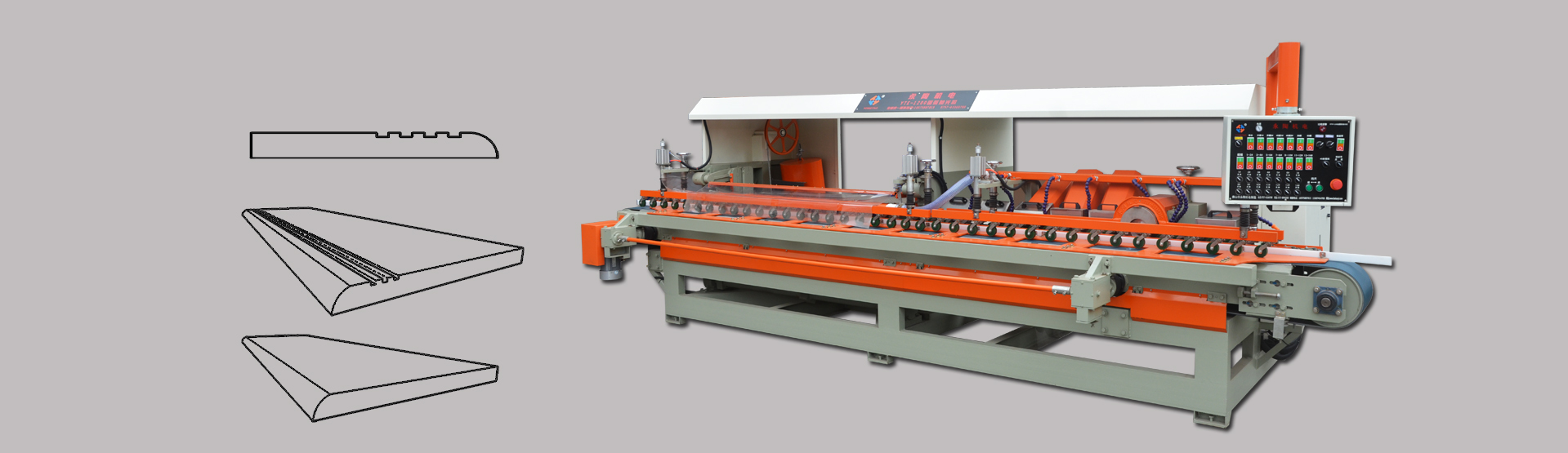
A CNC stone bridge saw cuts large stone slabs into accurate sizes with more consistent positioning and repeatability than manual cutting methods. The Yongtao 3200 Series three-axis CNC stone bridge saw combines infrared alignment, CNC program control, hydraulic transmission and a tilting worktable for marble, granite, quartz and other slab-processing applications.
A three-axis CNC stone bridge saw is best suited to factories that mainly cut marble, granite, quartz and similar slabs into straight or rectangular sizes. Workshops that require sink cutouts, curved shapes, drilling or automatic 45-degree cutting should compare 4+1 and five-axis configurations before ordering.
A CNC stone bridge saw is a diamond-blade machine built around a rigid bridge structure. The cutting head travels above the worktable while the control system manages cutting dimensions and movement. This design supports stable blade travel across large slabs and helps operators repeat standard cutting programs.
Compared with a manually positioned saw, CNC control reduces repeated measuring and makes batch sizing easier. It is commonly used for floor panels, wall cladding, stair components, countertop blanks and other rectangular stone products.
A three-axis machine mainly controls movement along the X, Y and Z directions. It is intended for straight longitudinal and cross cutting, slab sizing and repeated production. Complex sink cutouts, curves and fully automatic multi-angle processing may require a four-axis, 4+1 or five-axis machine.
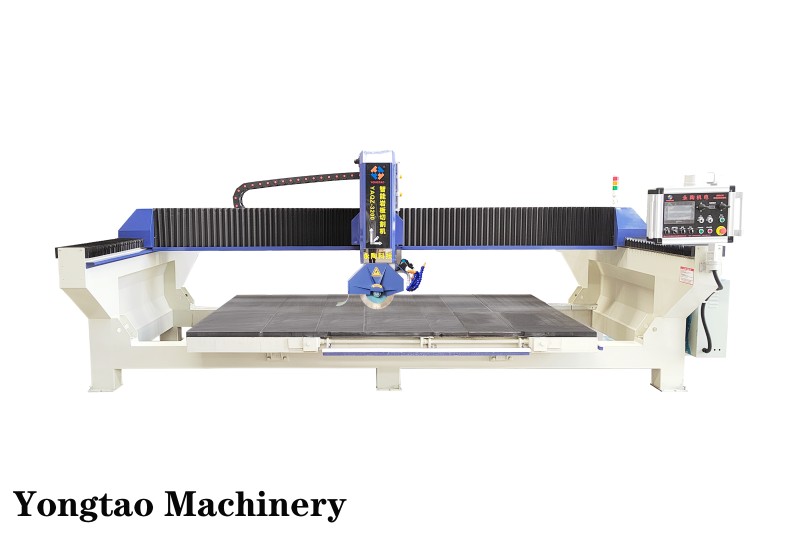
Infrared alignment helps the operator identify the intended cutting line before the blade enters the slab. Cutting dimensions and sequences are entered through the control interface, allowing repeated sizing with less dependence on manual marking.
For valuable materials or batch work, the first finished piece should still be measured before continuous production begins.
The bridge, guide system and transmission components work together to keep blade movement smooth during cutting. Hydraulic transmission supports controlled movement and practical daily operation. A rigid structure is important because vibration can affect dimensional consistency, edge quality and blade life.
The cutting head can rotate through 90 degrees for longitudinal and cross cutting without repeatedly repositioning the slab. The worktable can tilt from 0 to 85 degrees to assist with loading and unloading large slabs.
The tilting table is mainly a slab-handling function. It should not be confused with automatic blade tilting for bevel cutting. Buyers who require programmed 45-degree cuts should confirm a suitable machine configuration before ordering.
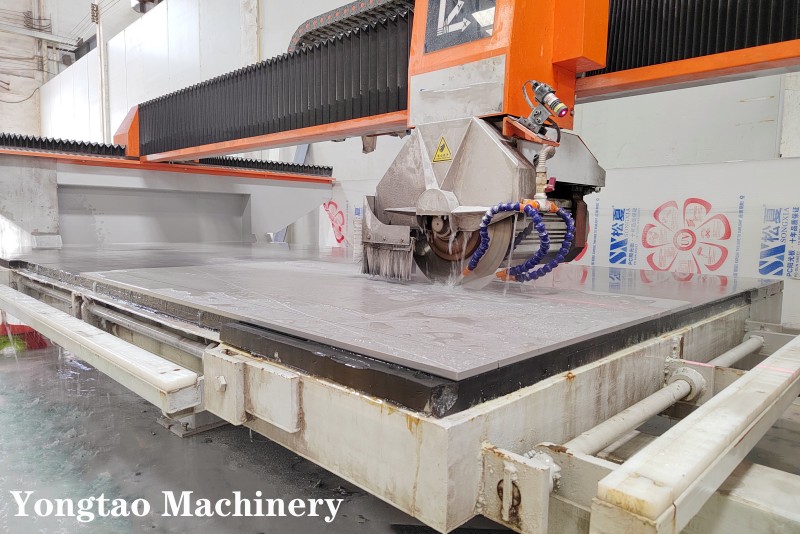
With the correct diamond blade, feed rate and cooling conditions, the machine can be configured for marble, granite, quartz stone, natural stone, slate and selected sintered stone applications.
Each material requires appropriate parameters. Granite needs sufficient machine rigidity and cutting power, while quartz and sintered materials require careful blade selection and edge-chipping control.
The three-axis CNC bridge saw is suitable for:
Cutting large slabs to required dimensions
Producing rectangular countertop blanks
Sizing floor and wall panels
Cutting stair treads and risers
Preparing slabs for edge polishing or chamfering
Repeating multiple sizes in batch production
It is most efficient when production mainly involves straight cuts and repeated dimensions. Intricate internal openings, narrow curves and complex profiles are better handled by a waterjet or multi-axis cutting system.
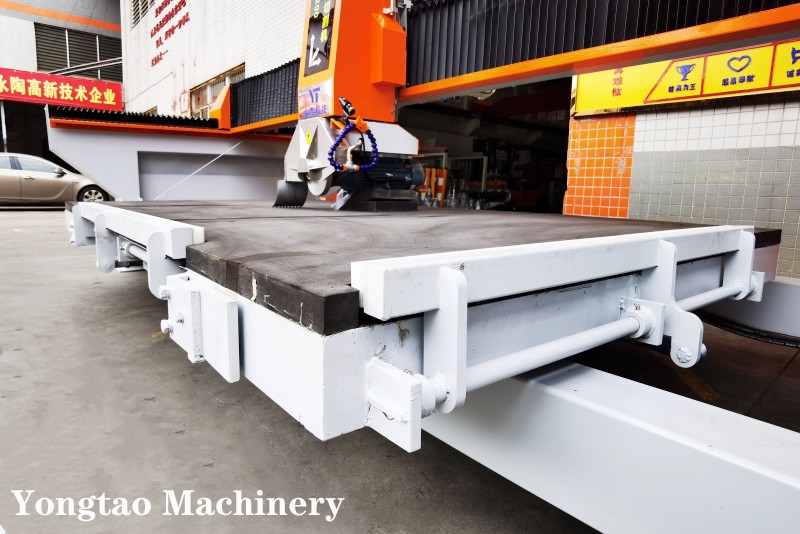
The 3200 Series supports a maximum cutting length of approximately 3.2 metres, making it suitable for common large-format slab work. Buyers should confirm the usable X, Y and Z travel, blade diameter, maximum thickness and table size for the exact configuration quoted.
After the dimensions are entered and the first piece is checked, the CNC system supports repeated cutting sequences. This helps reduce measuring variation and maintain more consistent sizes across a production batch.
Blade speed and cutting movement should match the material, thickness and blade specification. Correct settings help control chipping, cutting resistance and blade wear. Frequently used parameters should be recorded so different operators can repeat the same process.
The integrated layout simplifies transport and installation compared with larger civil-foundation systems. When planning the machine position, allow enough space for slab loading, operator access, water drainage and finished-product movement.
A three-axis CNC stone bridge saw is suitable when most orders involve straight slab sizing, rectangular products and repeated cutting dimensions. It is a practical option for marble and granite workshops, building-material factories and stone fabricators that do not need complex multi-axis processing.
Choose a higher-axis machine when production regularly requires automatic angle changes, circles, polygons, countertop openings or irregular shapes. A 4-axis stone bridge saw provides greater directional flexibility, while a 4+1 multifunctional stone CNC bridge saw is better suited to countertop cutting, drilling and selected 45-degree work. A five-axis CNC stone cutting machine is more suitable for complex shapes, multi-angle cutting, countertop openings and automated customized stone processing.
The correct choice depends on the products being made, not only on the number of axes. A simpler machine that matches daily production can be more efficient than an advanced model whose functions are rarely used.
Before comparing quotations, check:
Usable cutting length, width and vertical travel
Supported blade diameter and cutting thickness
Main motor and spindle specification
Bridge, frame and guide structure
CNC controller and operating language
Infrared alignment system
Worktable size and tilting range
Hydraulic, electrical and cooling systems
Available safety protection
Ask for a complete specification sheet, operating video and a cutting test using material similar to your own slabs.
Machine speed should not be evaluated alone. Inspect the top and bottom dimensions, edge chipping, cutting-line straightness and repeatability across several pieces. Record the test material, slab thickness, blade size, feed setting and measured results so the comparison is based on repeatable production data rather than one visually acceptable sample. Also check whether the operator can position the slab, load the program and repeat the process without unnecessary adjustment.
Before ordering, confirm factory testing, installation guidance, operator training, warranty scope, spare-parts supply, and long-term technical support. Overseas buyers should also verify the voltage and frequency, control language, export packaging, shipping responsibilities, site preparation requirements, and whether remote or on-site installation support is available.
Provide the supplier with:
Main materials and slab thickness
Maximum slab length and width
Required finished products and cutting shapes
Expected daily production
Required blade size and edge-quality standard
Available factory space and loading method
Local voltage and frequency
Need for angle cutting, drilling or special functions
Photos or drawings of typical products
This information allows the supplier to recommend a configuration based on real production requirements instead of offering a general machine.
It can cut marble, granite, quartz, natural stone and slate with a suitable diamond blade and cutting parameters. Selected sintered stone may also be processed when the blade, support surface and cutting method are appropriate.
The machine is designed for a maximum cutting length of approximately 3200 mm. Confirm the working width, vertical travel and maximum cutting thickness for the exact model before ordering.
Buyers should look for a bridge saw manufacturer or authorized supplier that can recommend and test a machine configuration based on the required granite countertop processes. A three-axis CNC stone bridge saw is suitable for straight slab sizing and rectangular countertop blanks.
If production requires sink cutouts, curved profiles, drilling or automatic 45-degree cutting, buyers should compare 4+1 and five-axis configurations before ordering. Ask the supplier for complete technical specifications, granite cutting samples, machine-testing videos, warranty coverage, installation guidance, operator training, spare-parts support and after-sales service.
The worktable tilts to assist with loading and unloading large slabs. It does not automatically mean that the blade can perform programmed bevel cutting.
Request a test using a material and thickness similar to planned production. Measure several pieces and inspect top and bottom dimensions, straightness, chipping and repeatability. One visually acceptable sample is not enough to judge batch consistency.
A three-axis CNC bridge saw controls movement along the X, Y and Z axes and is mainly used for straight slab sizing, rectangular cutting and repeated production. It is suitable for factories that mainly produce straight-cut and rectangular products from marble, granite and quartz slabs.
A 4+1 CNC bridge saw provides additional rotary or auxiliary processing functions for angled cutting, countertop openings, drilling and more complex stone shapes, depending on the machine configuration. Buyers should choose between the two machines according to their regular products, required cutting processes and production needs rather than simply selecting the model with more axes.
For straight slab sizing, repeated cutting and standard marble, granite or quartz processing, the Yongtao 3200 Series three-axis bridge saw provides a practical CNC solution. Send your slab dimensions, material type, required products, production capacity and local voltage to receive a suitable configuration recommendation.
 0086-18665475362
[email protected]
Road 3, Wuzhuang Xiaofengtian Ind. Zone, Luocun Town, Nanhai Dist., Foshan, Guangdong, China
 0086-18665475362
 [email protected]
 Road 3, Wuzhuang Xiaofengtian Ind. Zone, Luocun Town, Nanhai Dist., Foshan, Guangdong, China
 English
 Español